{{
}}
Citizen science & machine learning for plant Identification: challenges from Pl@ntNet
Joseph Salmon
IMAG, Univ Montpellier, CNRS, Inria, Montpellier, France
Consortium Pl@ntnet
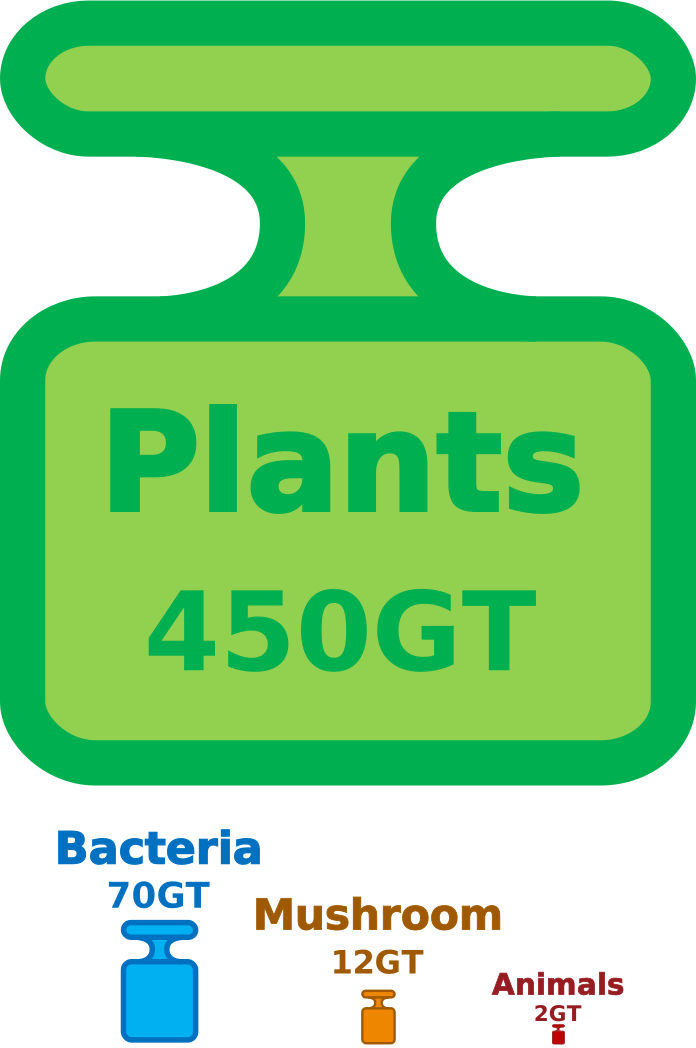
The services they provide to us
- Provisioning: Food, Medicines …
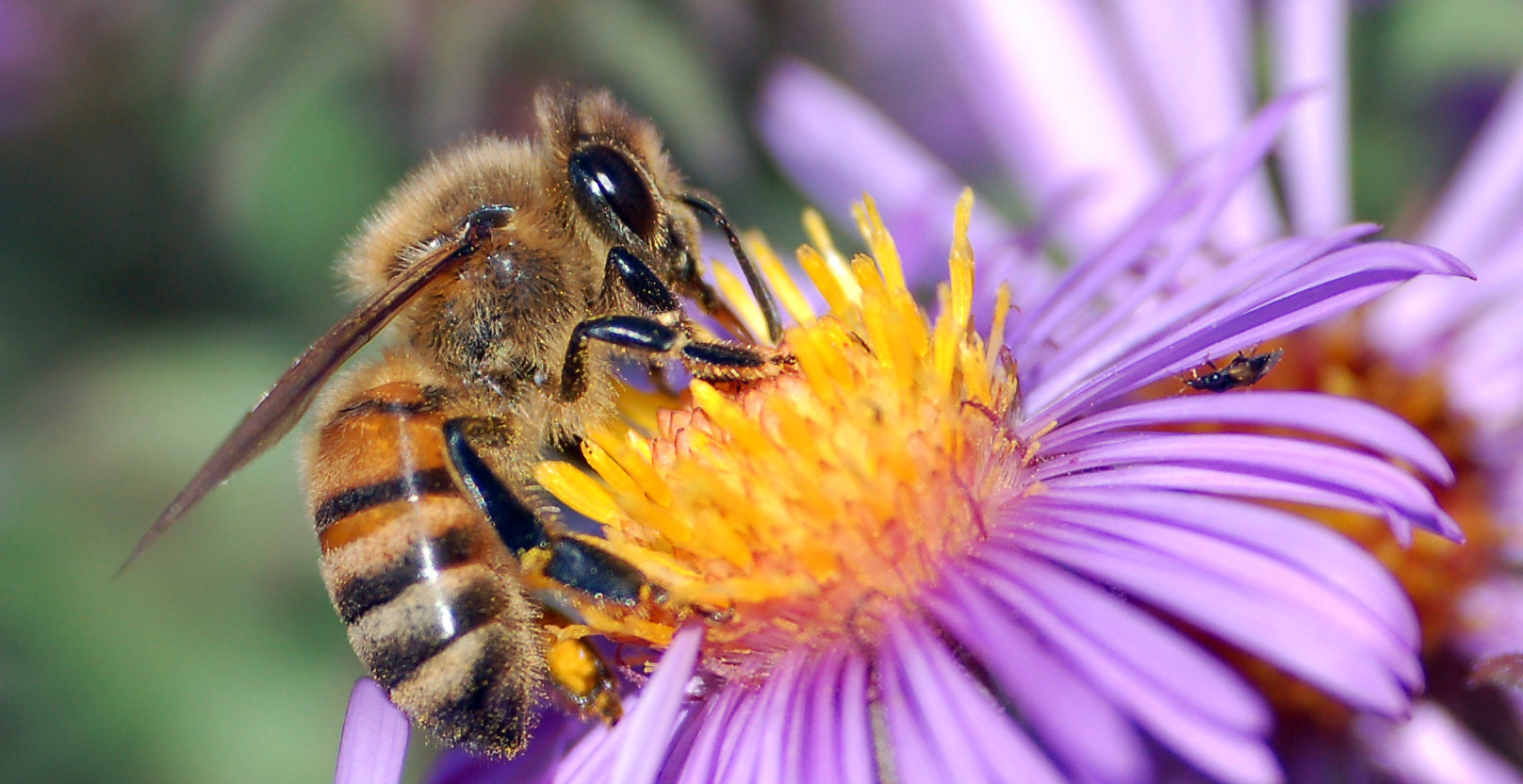
- Supporting: Photosynthesis, soil formation, water cycle, …
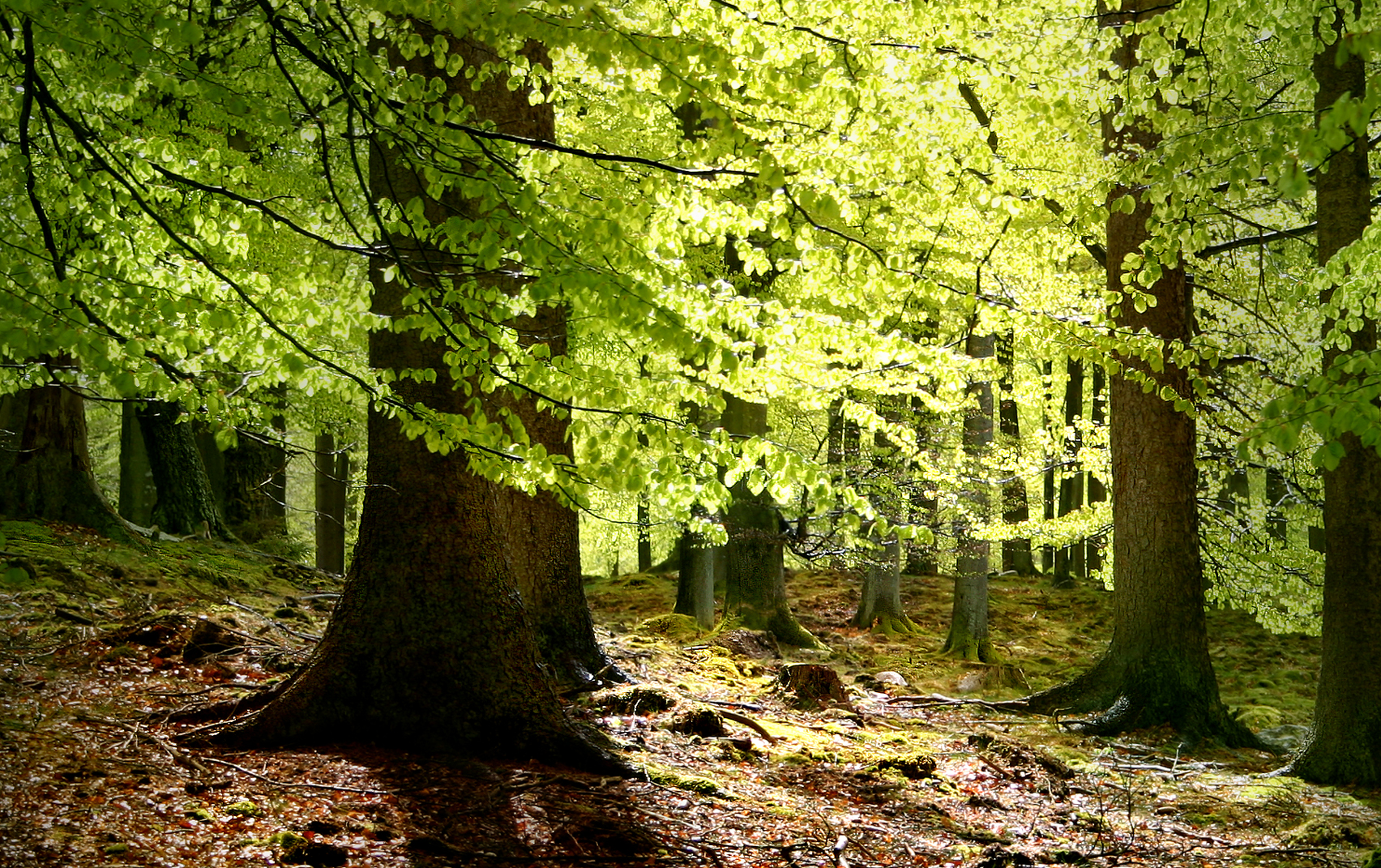
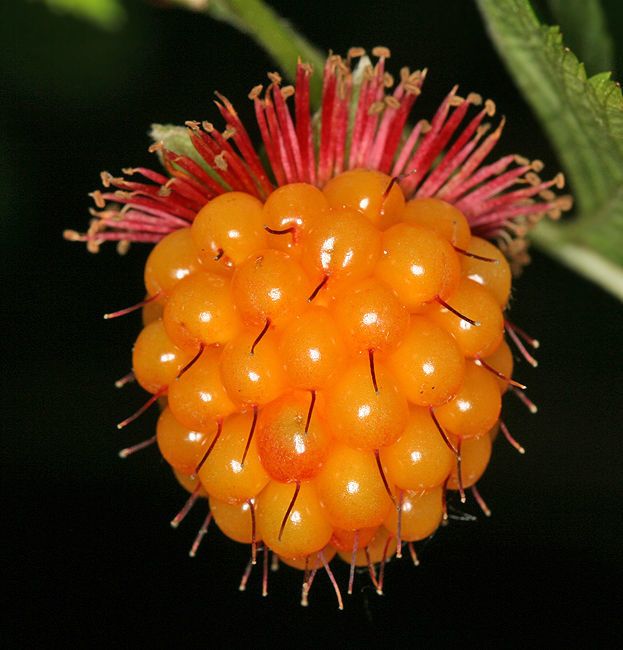
- Regulating: Pollination, Climate, …
- Cultural: Places for recreation, wonder, …

Pl@ntNet: ML for citizen science

A machine learning-driven citizen science platform for mobile plant identification

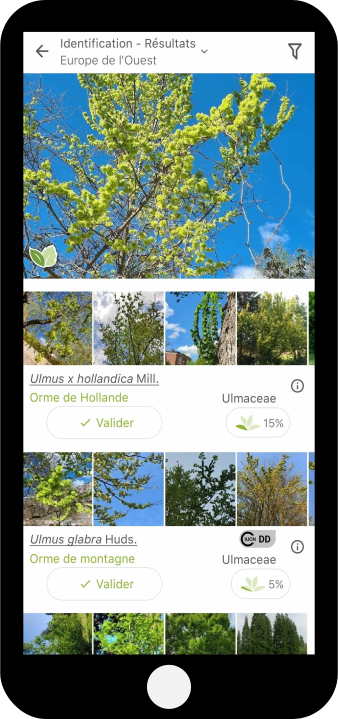


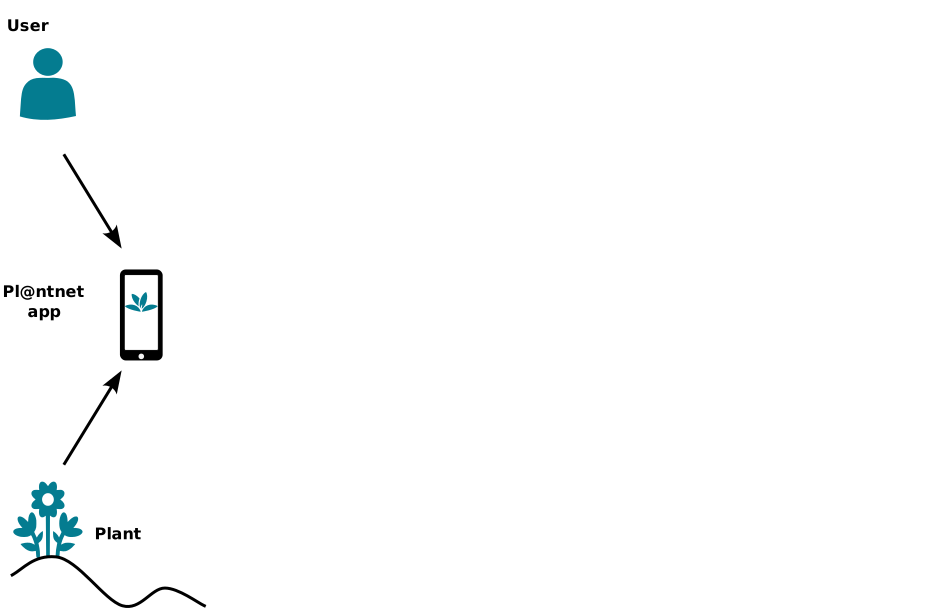
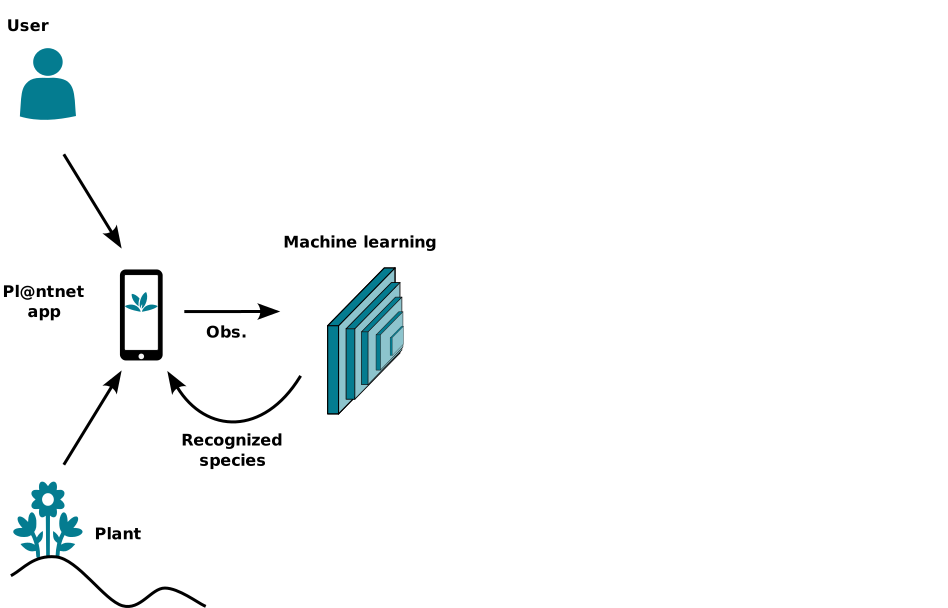
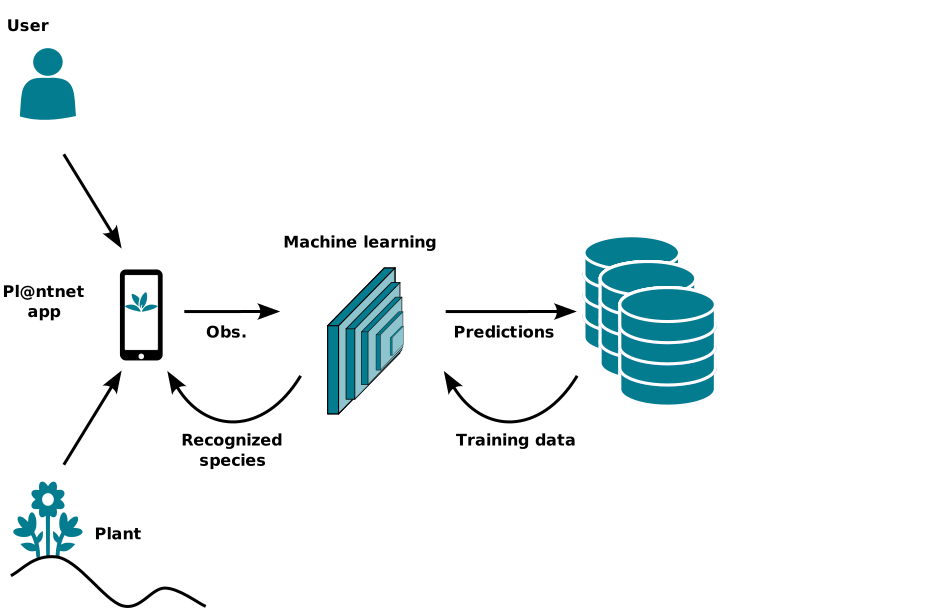
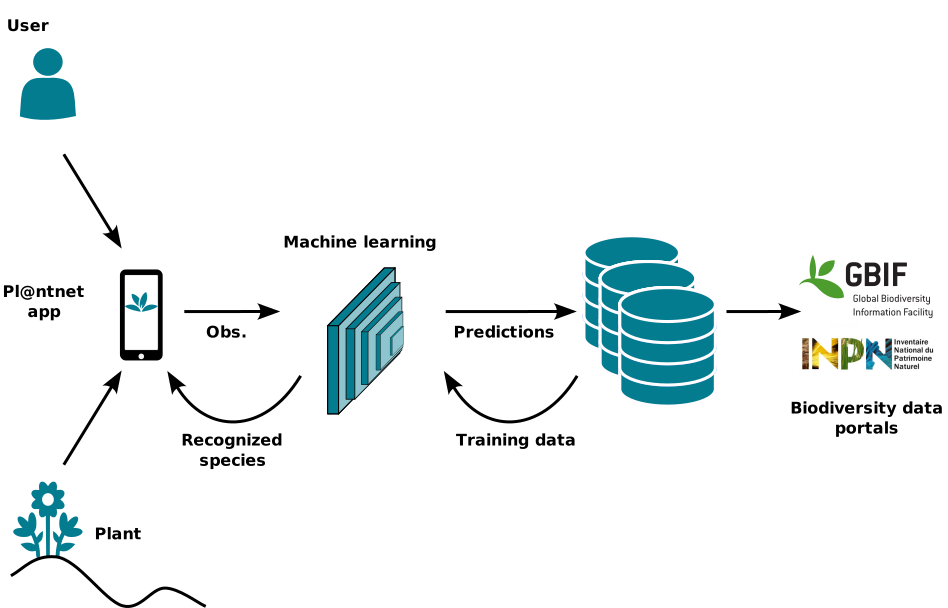
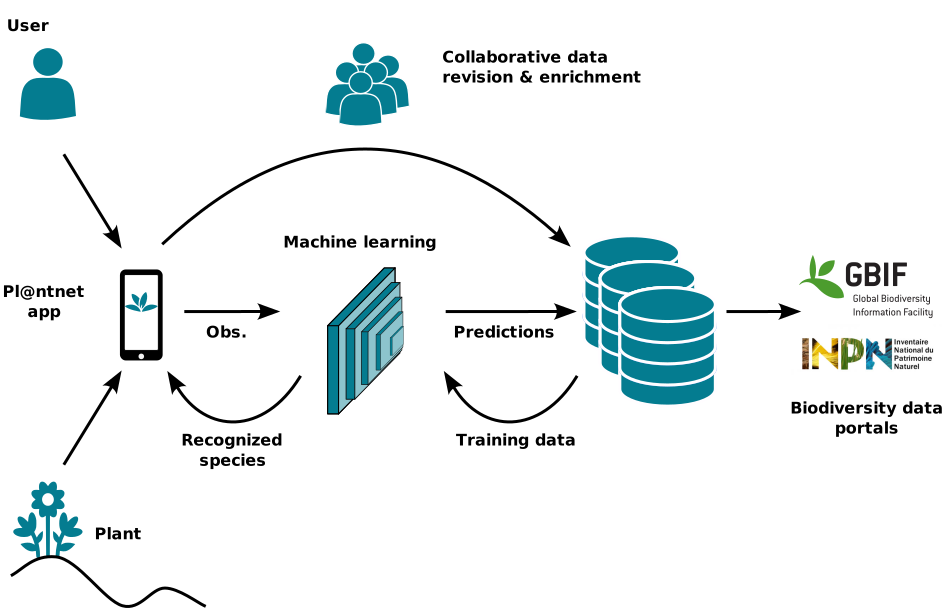
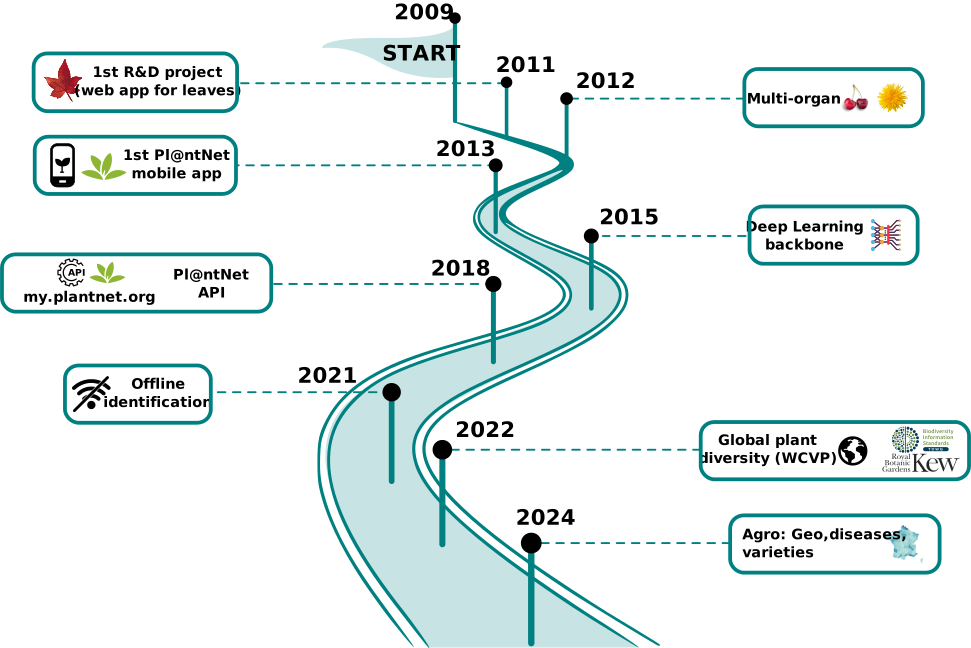
Note: I am mostly innocent, I started working with the Pl@ntNet team in 2020
A multidisciplinary collaboration:
- Stat / ML researchers
- Ecologists
- Engineers
- Citizen contributors
Addressing open challenges:
- Theoretical foundations
- Methodological advances
- Large-scale computational needs
- Cross-disciplinary integration

We need you: come and help us improve it, one way or another!
Alexis Joly
Primary investigator, INRIA
ResearchGate

Pierre Bonnet
Primary investigator, CIRAD
ResearchGate

Jean-Christophe Lombardo
Software Manager, IA engineer, INRIA
LinkedIn

Hervé Goëau
Researcher, CIRAD
ResearchGate
Christophe Botella
Researcher, INRIA
ResearchGate

Joseph Salmon
Researcher, INRIA
Website

Benjamin Bourel
Researcher, INRIA
Website

Lee Sue Han
Senior Lecturer, Swinburne University of Technology Sarawak Campus
Scholar

Fabrice Vinatier
Researcher, INRAE
ResearchGate

Lydia Bousset-Vaslin
Researcher, INRAE
Website

Diego Marcos
Researcher, INRIA
ResearchGate
Vanessa Hequet
Botanist, IRD
LinkedIn

Murielle Simo-Droissart
Botanist, IRD
ResearchGate

Jean-Marc Sadaillan
Project manager, INRAE
LinkedIn

Antoine Affouard
Backend & DB engineer, INRIA
LinkedIn

Mathias Chouet
Backend engineer, CIRAD
GitHub


Thomas Paillot
Front engineer, INRIA
LinkedIn
Rémi Palard
Geo & Fullstack engineer, CIRAD
LinkedIn

Théo Simoes
Backend engineer, INRAE
LinkedIn

Théo Larcher
PhD candidate, INRIA
LinkedIn

Giulio Martellucci
PhD candidate, INRIA
LinkedIn

Raphaël Benerradi
PhD candidate, INRIA
LinkedIn

Ilyass Moummad
Post-doc, INRIA
Personal website | Google Scholar
- Pl@ntNet-300K (Garcin et al., 2021): Creation and release of a large-scale dataset sharing the same property (Long Tail!) as Pl@ntNet; available for the community to improve learning systems
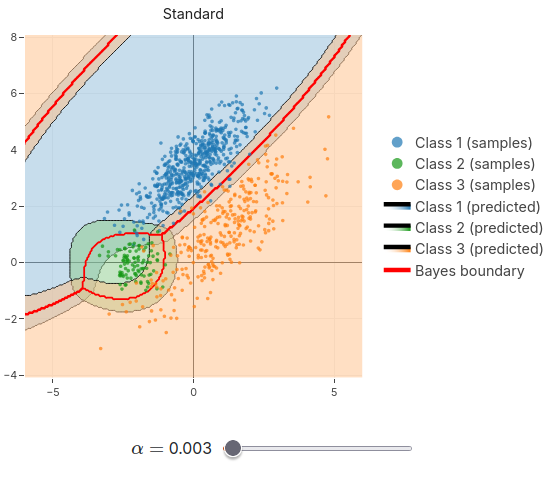
- Prediction uncertainty quantification
with long tail data (Ding et al., 2026): providing prediction sets with statistical guarantees with Conformal Prediction
- Learning & crowd-sourced data (Lefort et al., 2024; Lefort et al., 2025): How to leverage multiple labels per image to improve the model? Need to assert quality: the workers, the images/labels, the model, etc.

challenging standard ML assumptions
Pl@ntNet : a digital commons project
9 540 044
Users with accounts
3X more users without accounts
86 814
(WCVP) Species with photos
out of 404 389
1 511 221 837
Queries
unlabeled images : without species
32 952 432
Observations
labeled images: with species
_version_2.png)
436 TB
Storage
Source: Pl@ntNet stats
WCVP: World Checklist of Vascular Plants database.
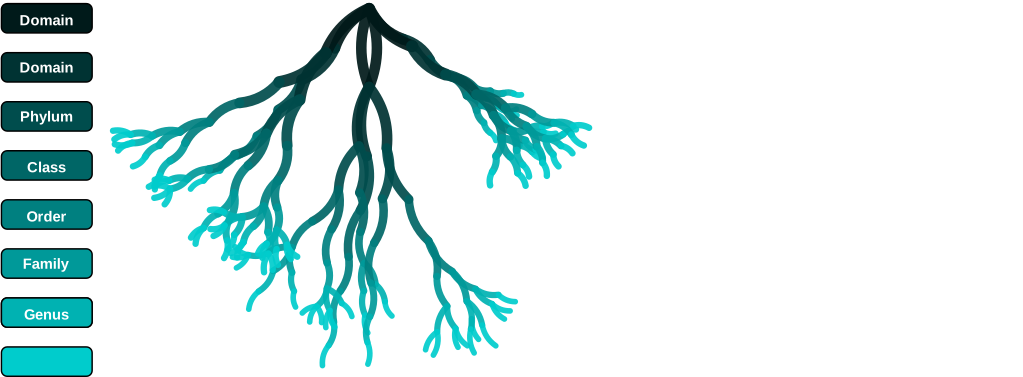
Structured labels: the tree of life
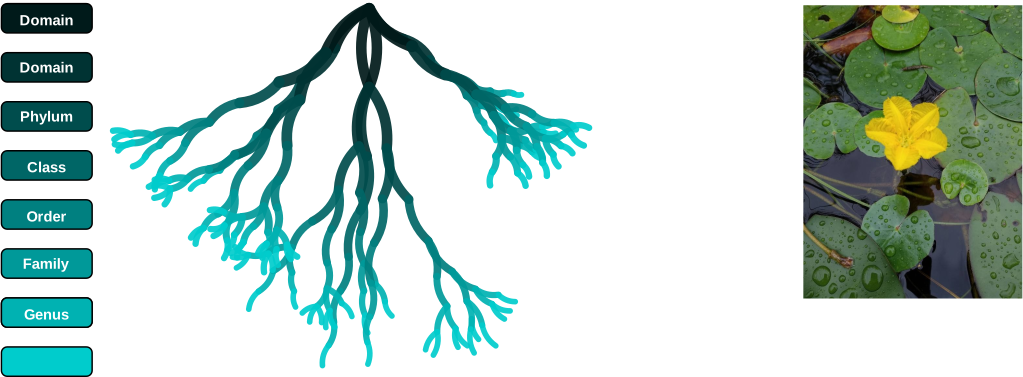
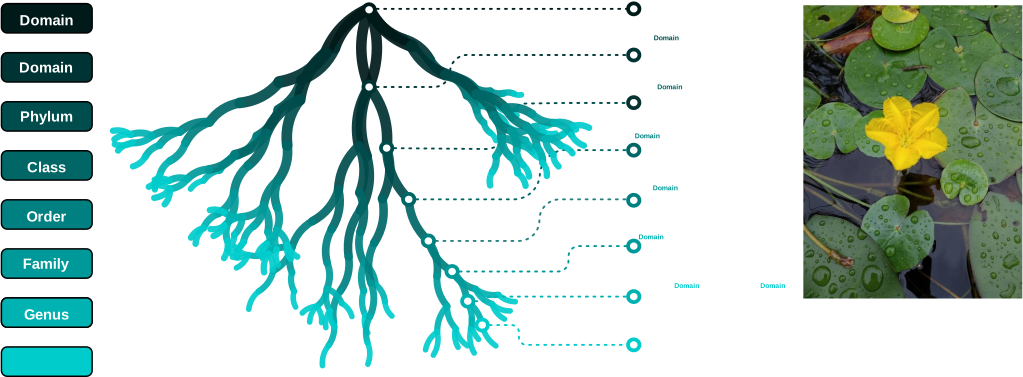
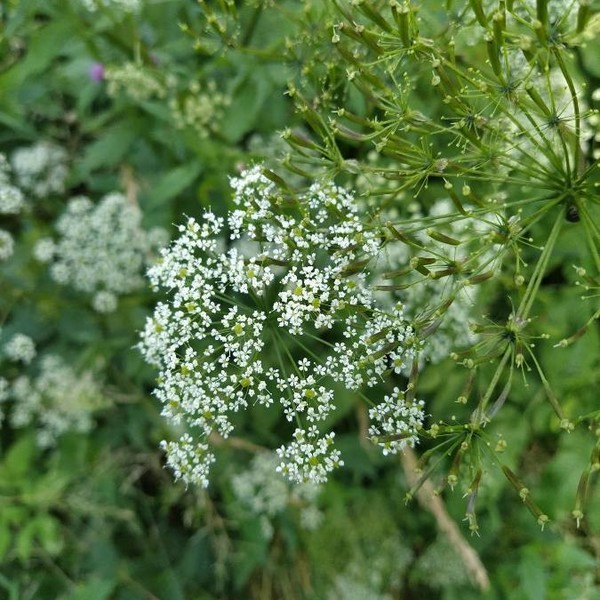
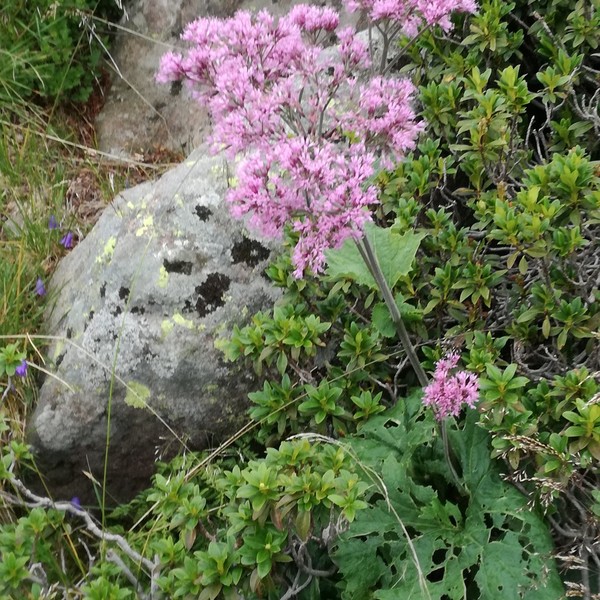
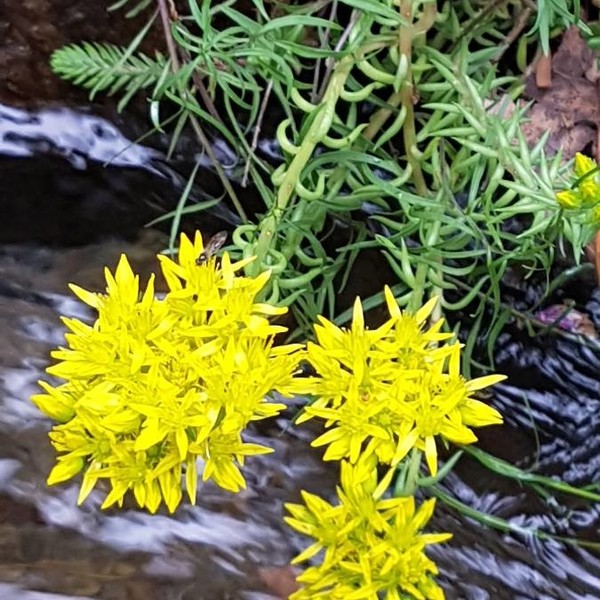
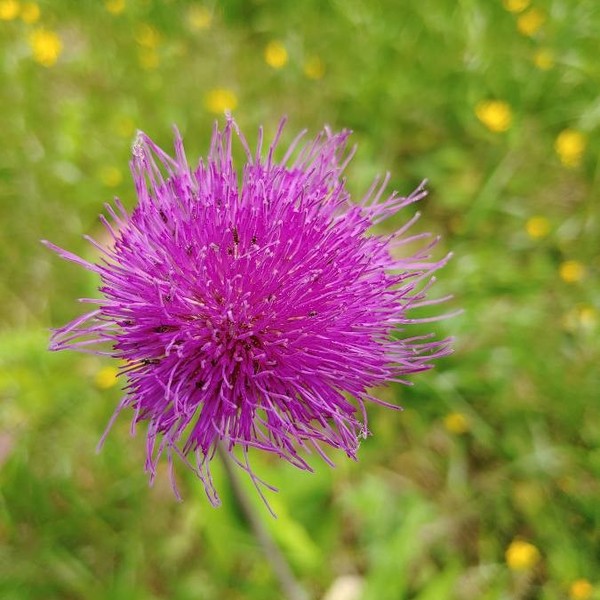
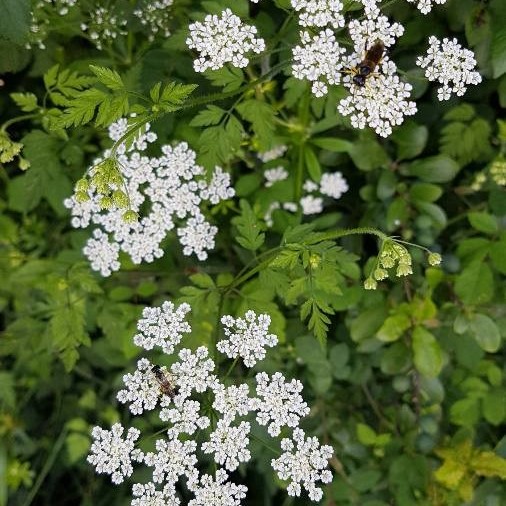
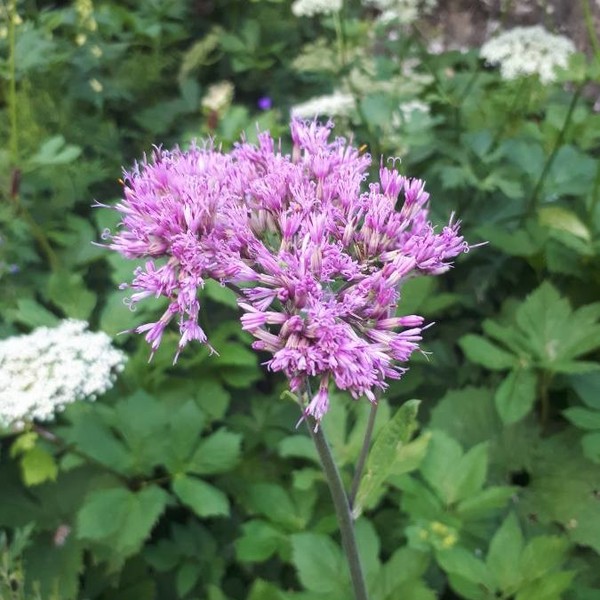
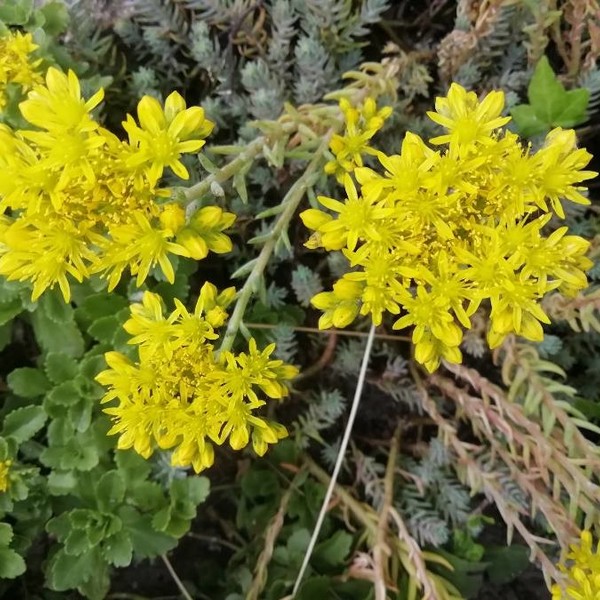
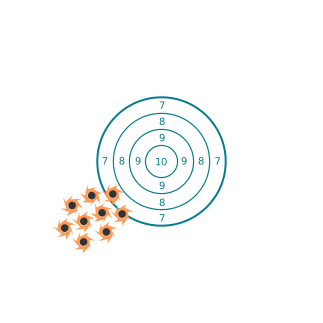
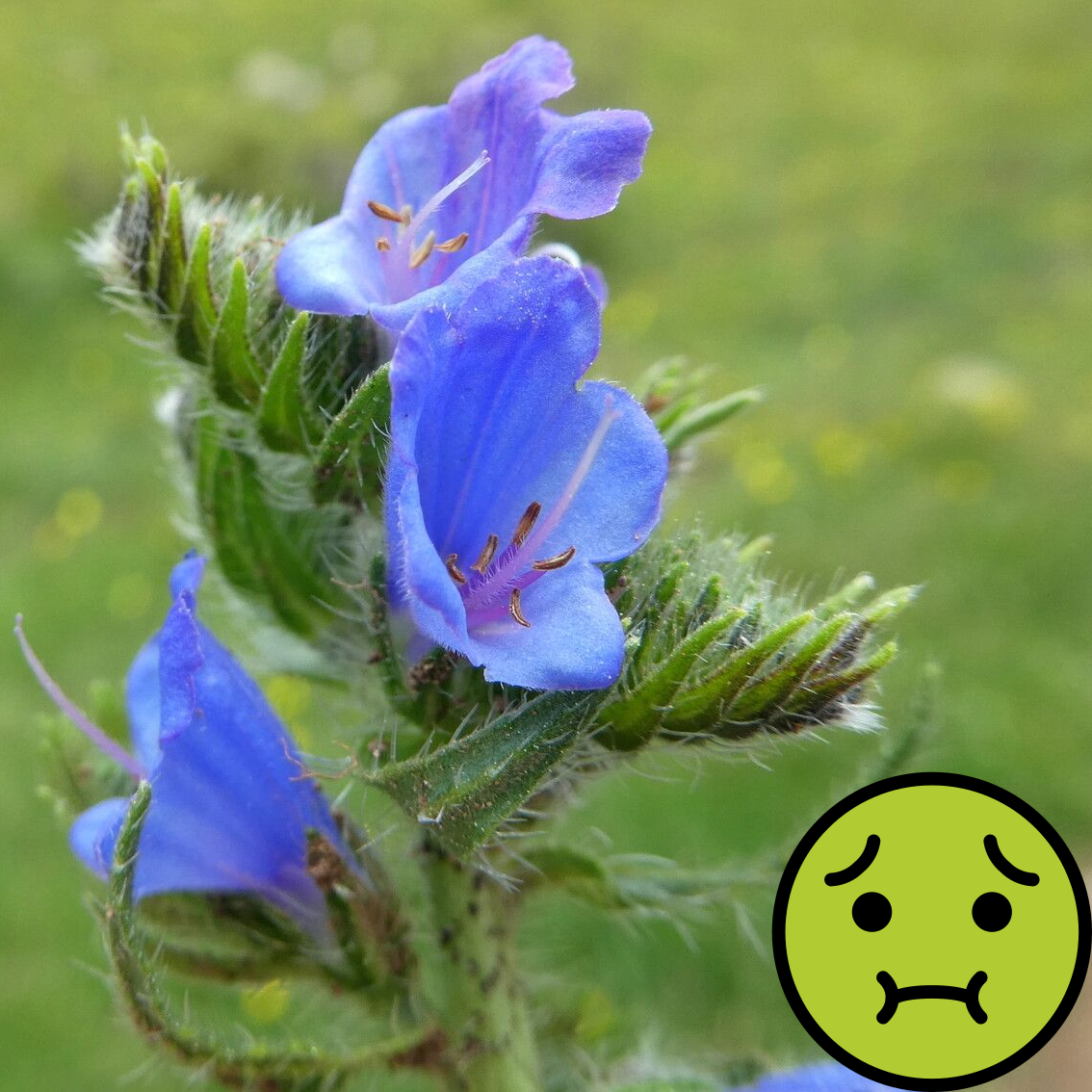
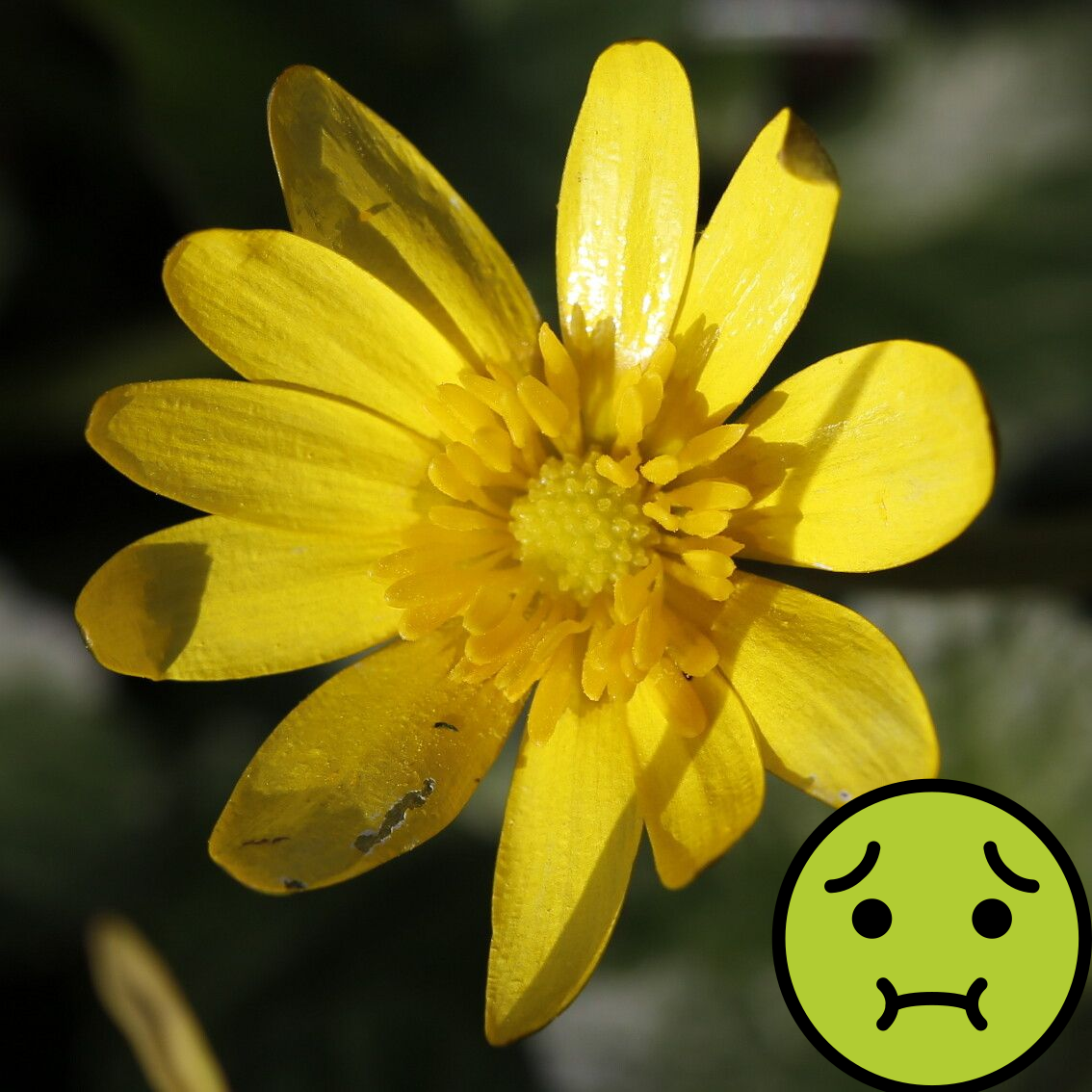
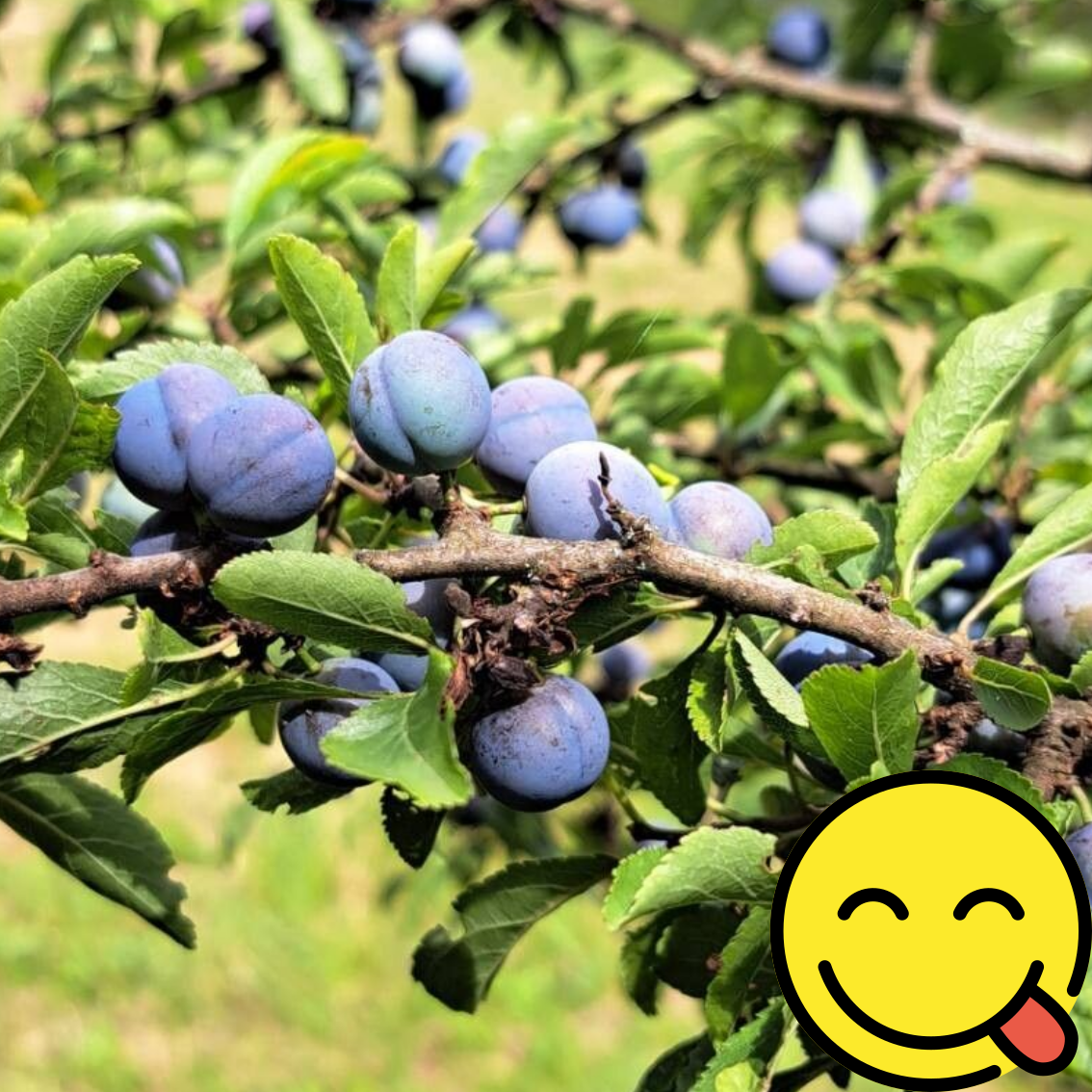
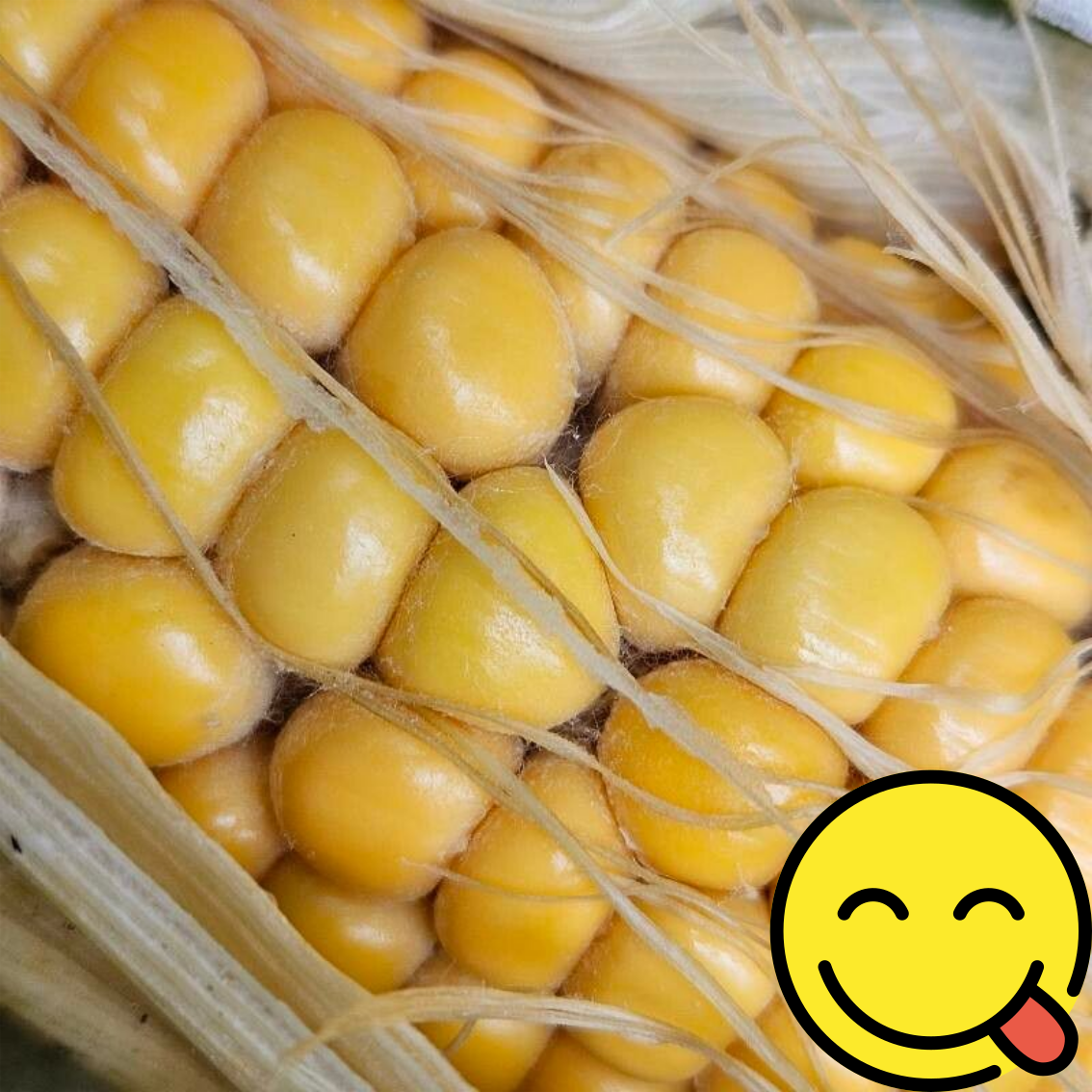
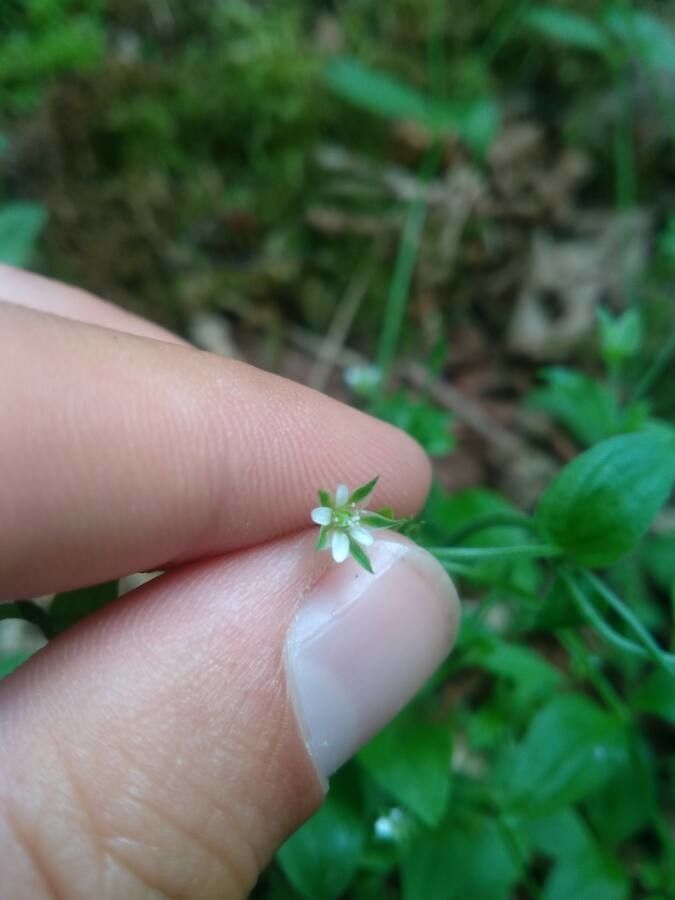
Intra-class variability
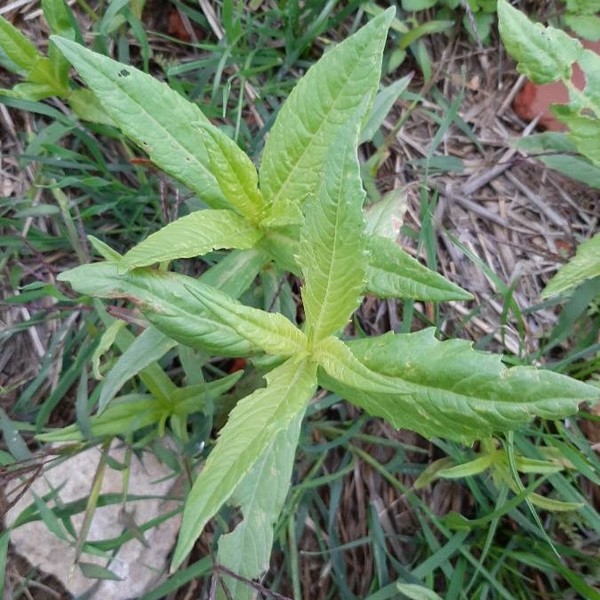
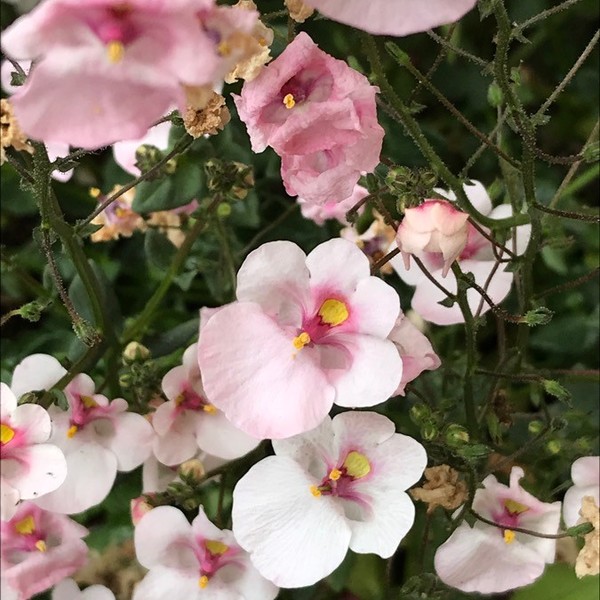
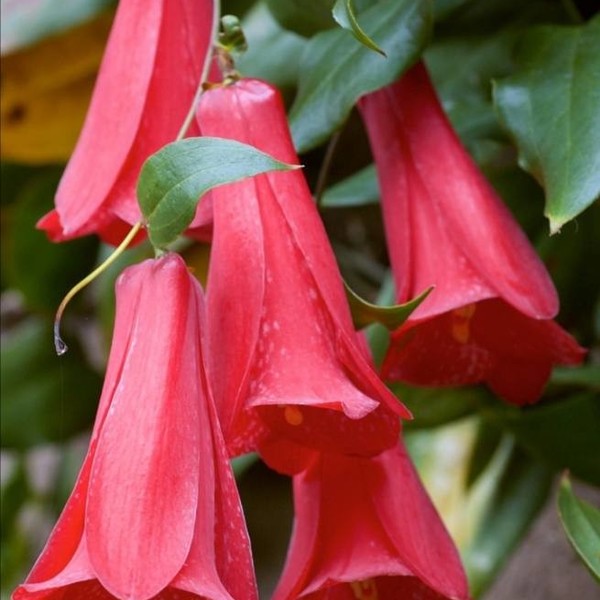
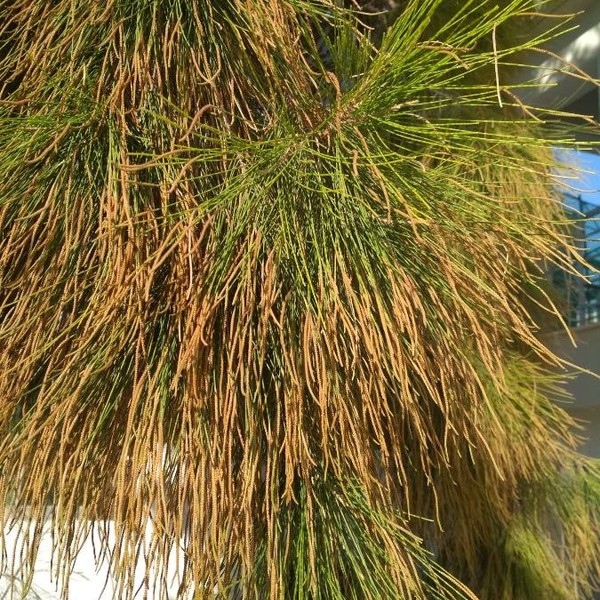
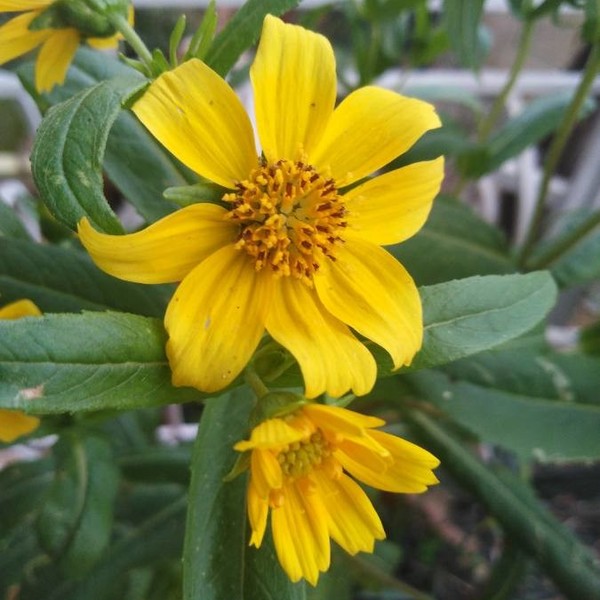
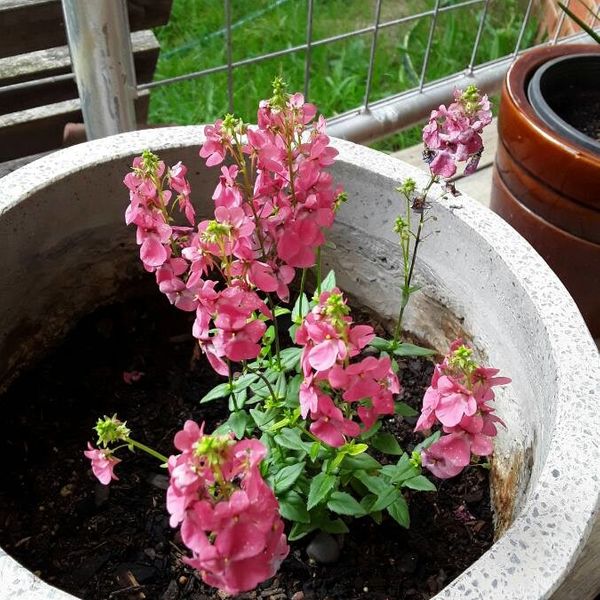
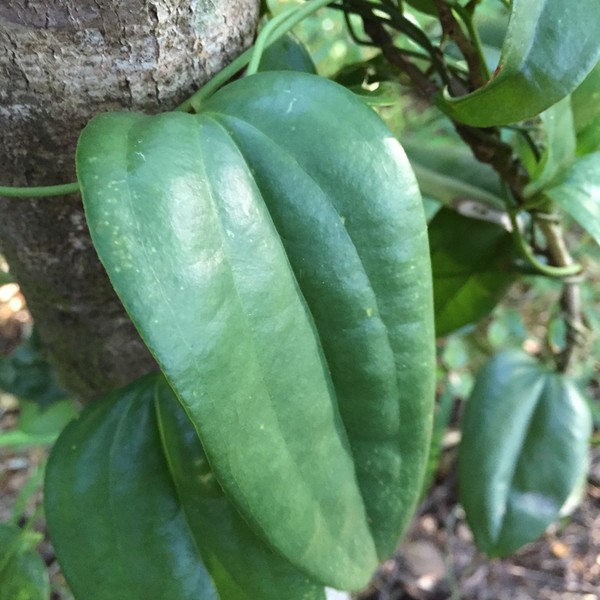
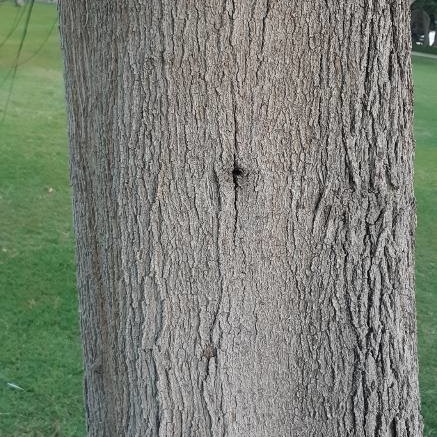
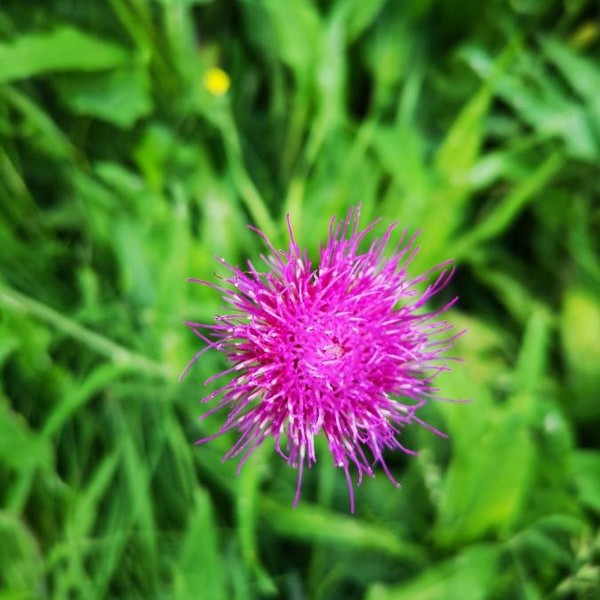
Inter-class ambiguity
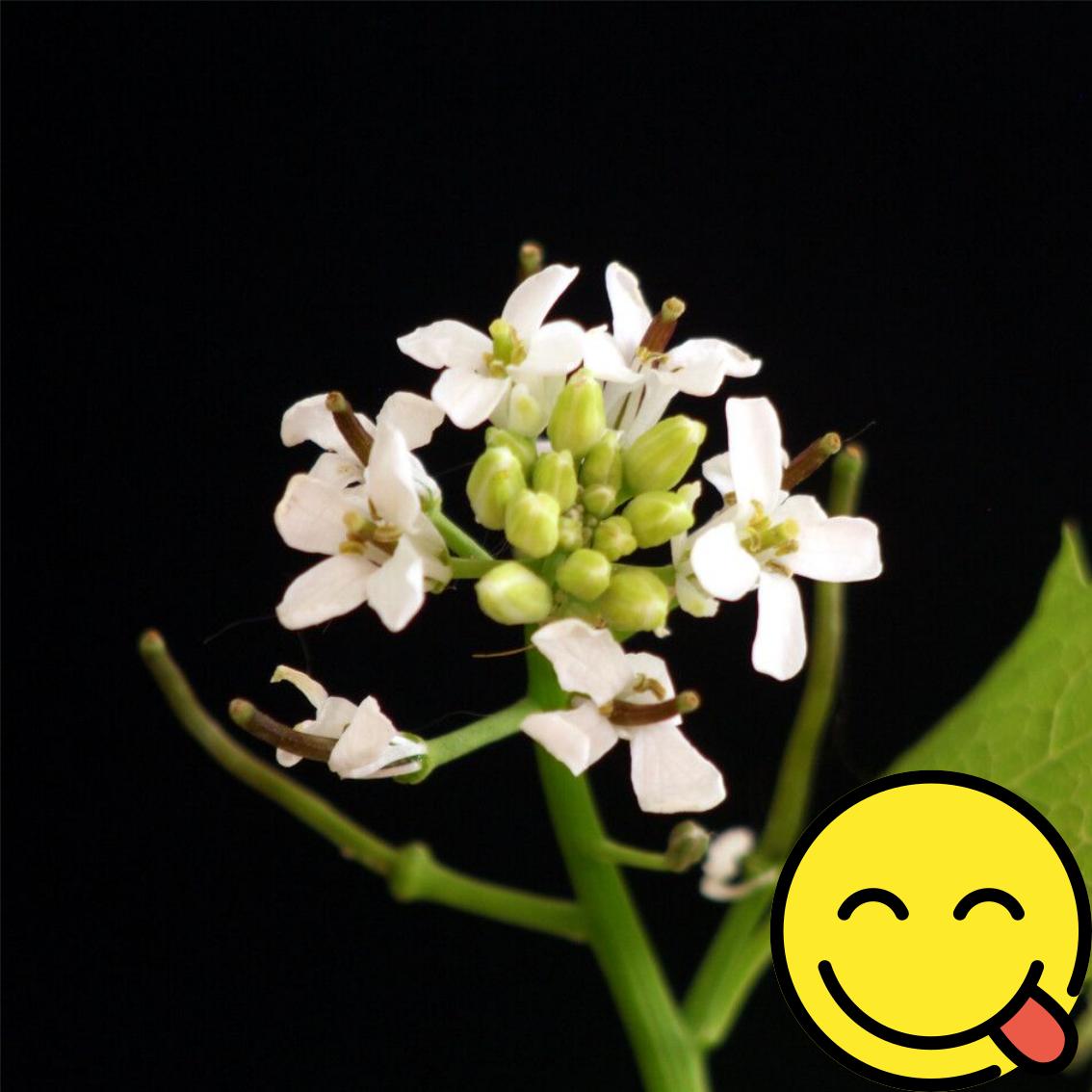
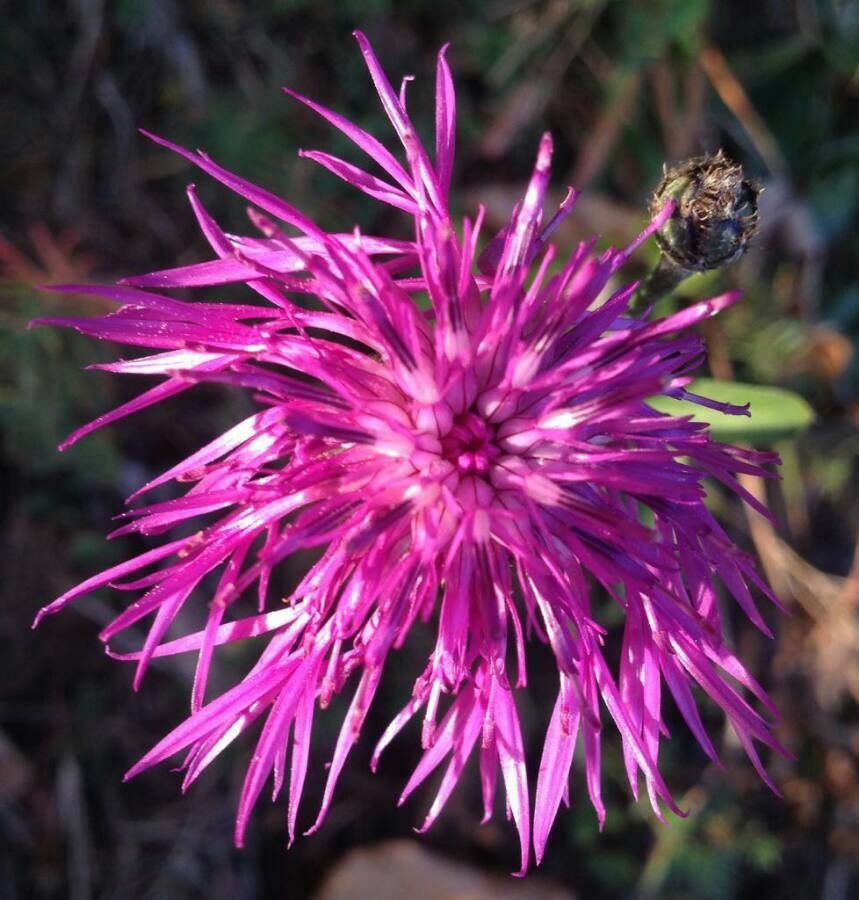
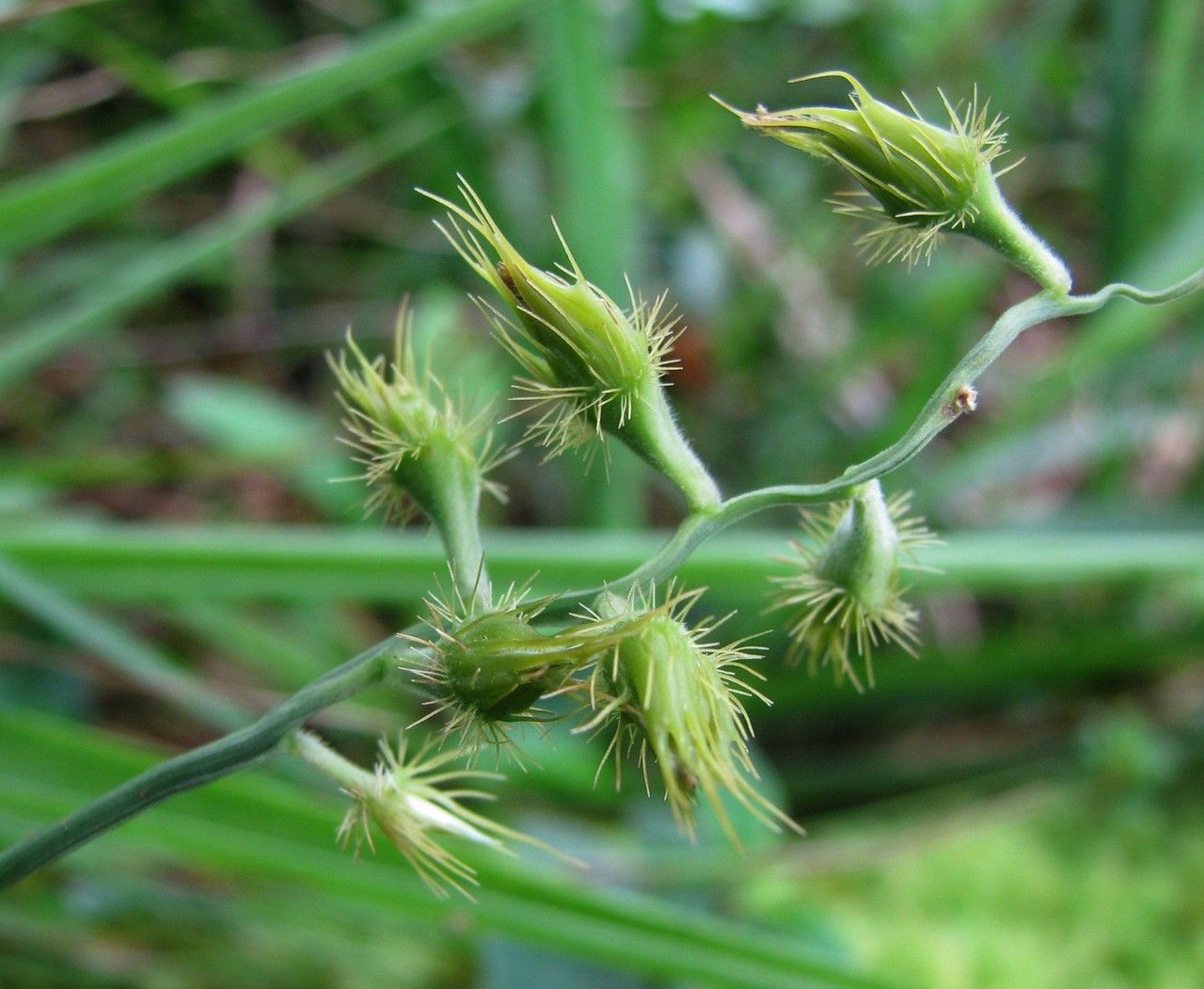
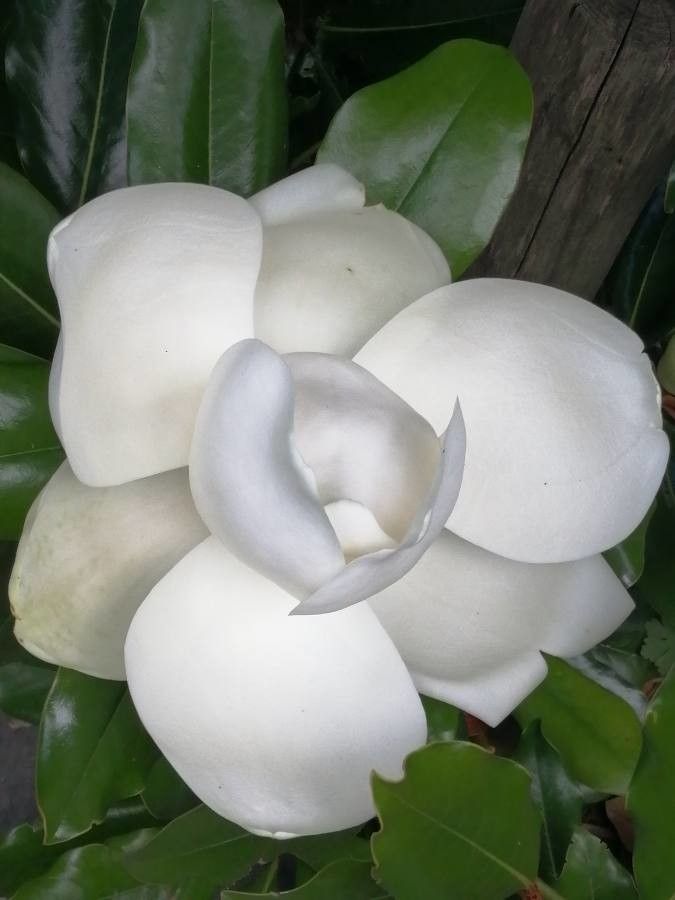


Datafication & data sharing
Popular labeled datasets limitations:
- structure of labels too simplistic (CIFAR-10, CIFAR-100)
- tasks too easy to discriminate / low labels confusion (MNIST)
- too well-balanced, same number of images per class (Imagenet)
- duplicate, low-quality, irrelevant images (Recht et al., 2019)
- Advance plant identification research with real-world biodiversity data
- Engage the ML community with meaningful challenges beyond synthetic benchmarks
Construction of Pl@ntNet-300K
Constraints:
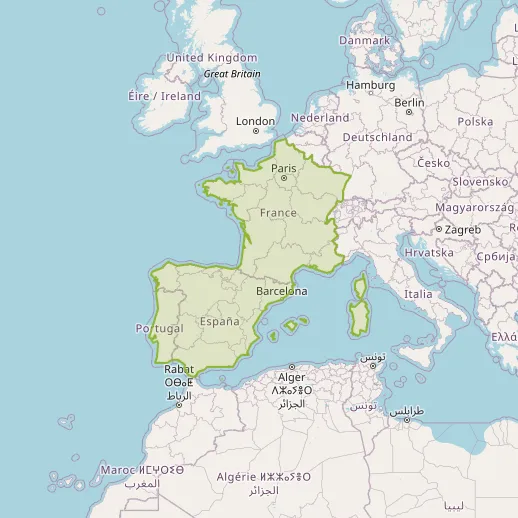
- Extract images from South-Western Europe (SWE): most covered regions
- Provide approx. 300 000 images
- Shareable on Zenodo (size < 50Go)
- Need more than 4 samples per class for train/val/test split
- Curated images / labels (well, really?)
Krizhevsky (2009): “Furthermore, we personally verified every label submitted by the labelers”, on CIFAR10 & CIFAR100 paper
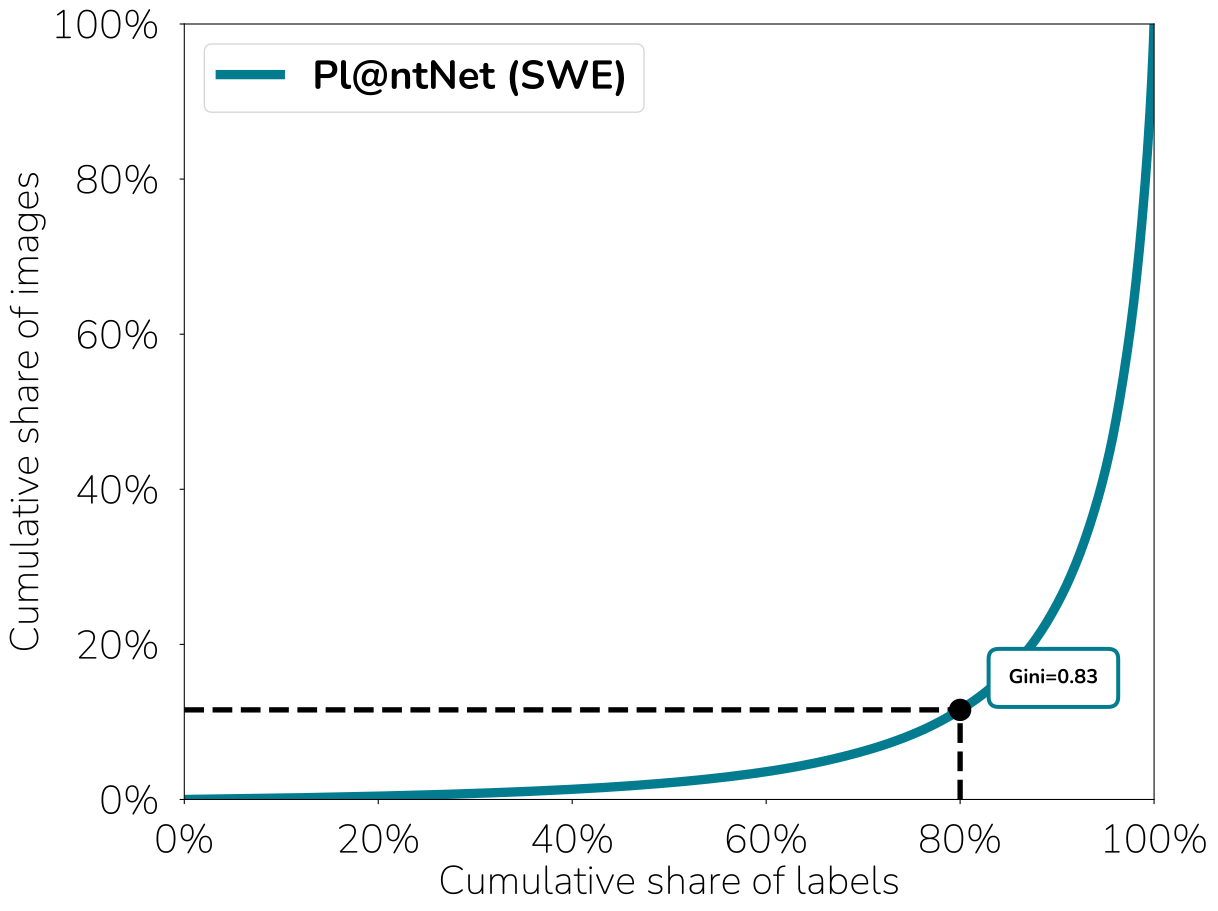
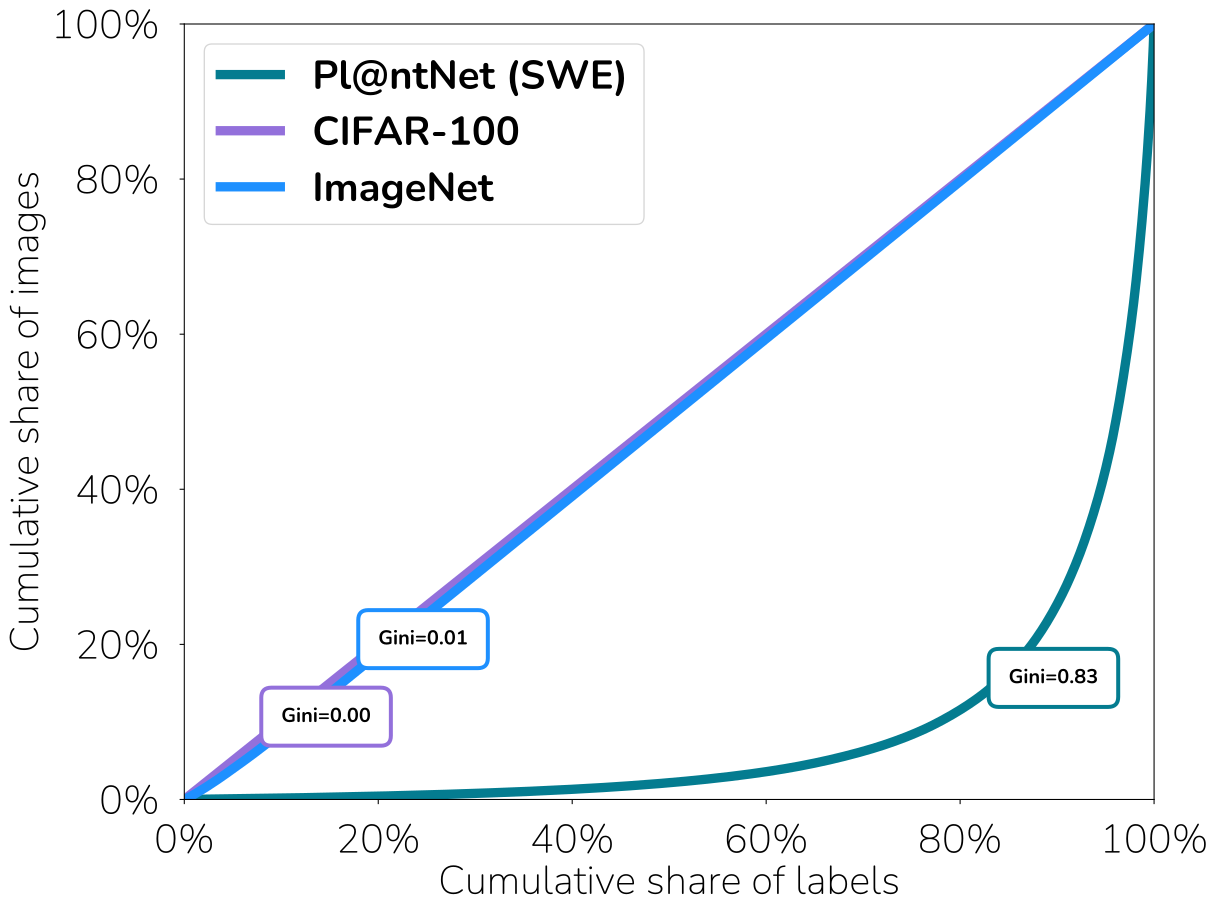
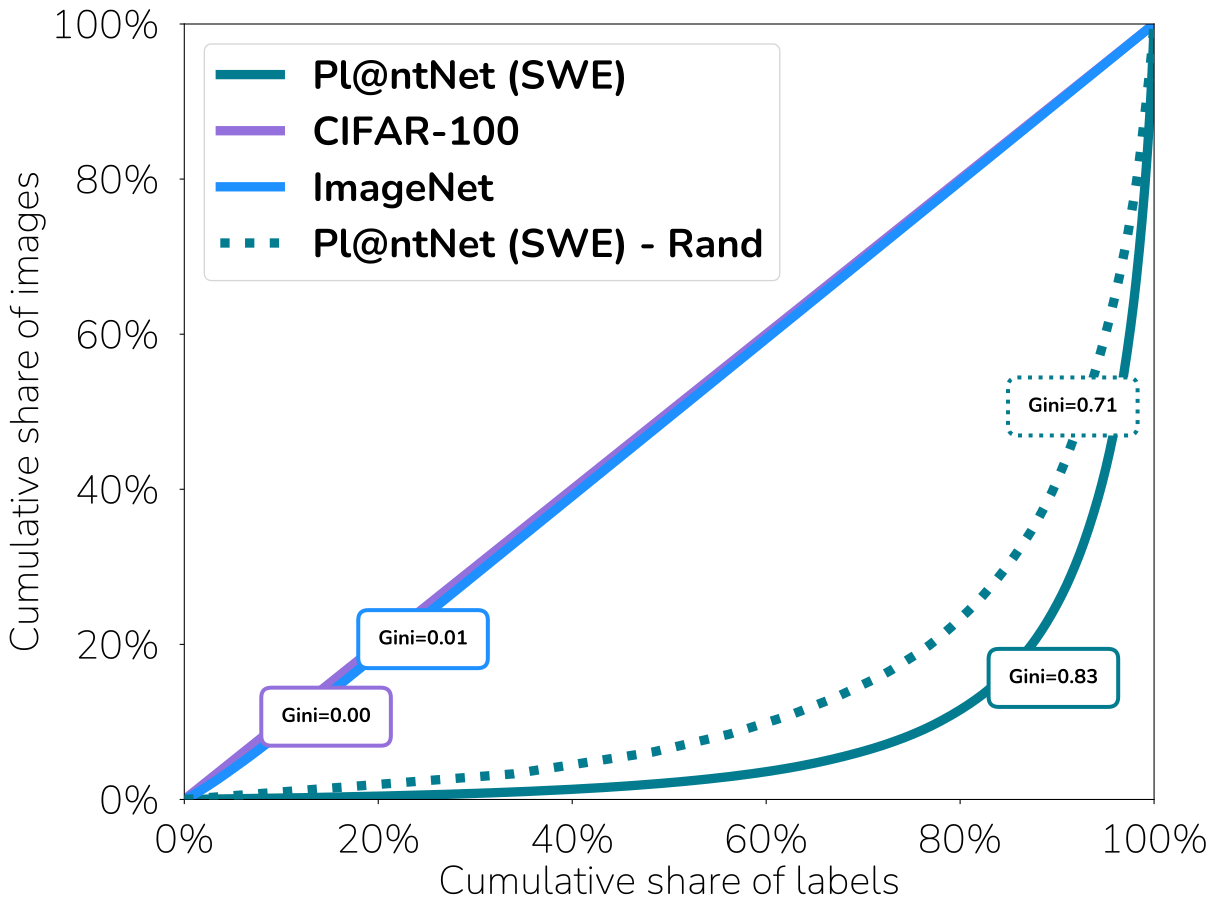
- Pl@ntNet (SWE): has a very long tail
- CIFAR-100: balanced
- ImageNet: (approx.) balanced
- Pl@ntNet (SWE) - Rand: subsampling images uniformly from Pl@ntNet (SWE) distorts the distribution
Hierarchical construction of Pl@ntNet-300K
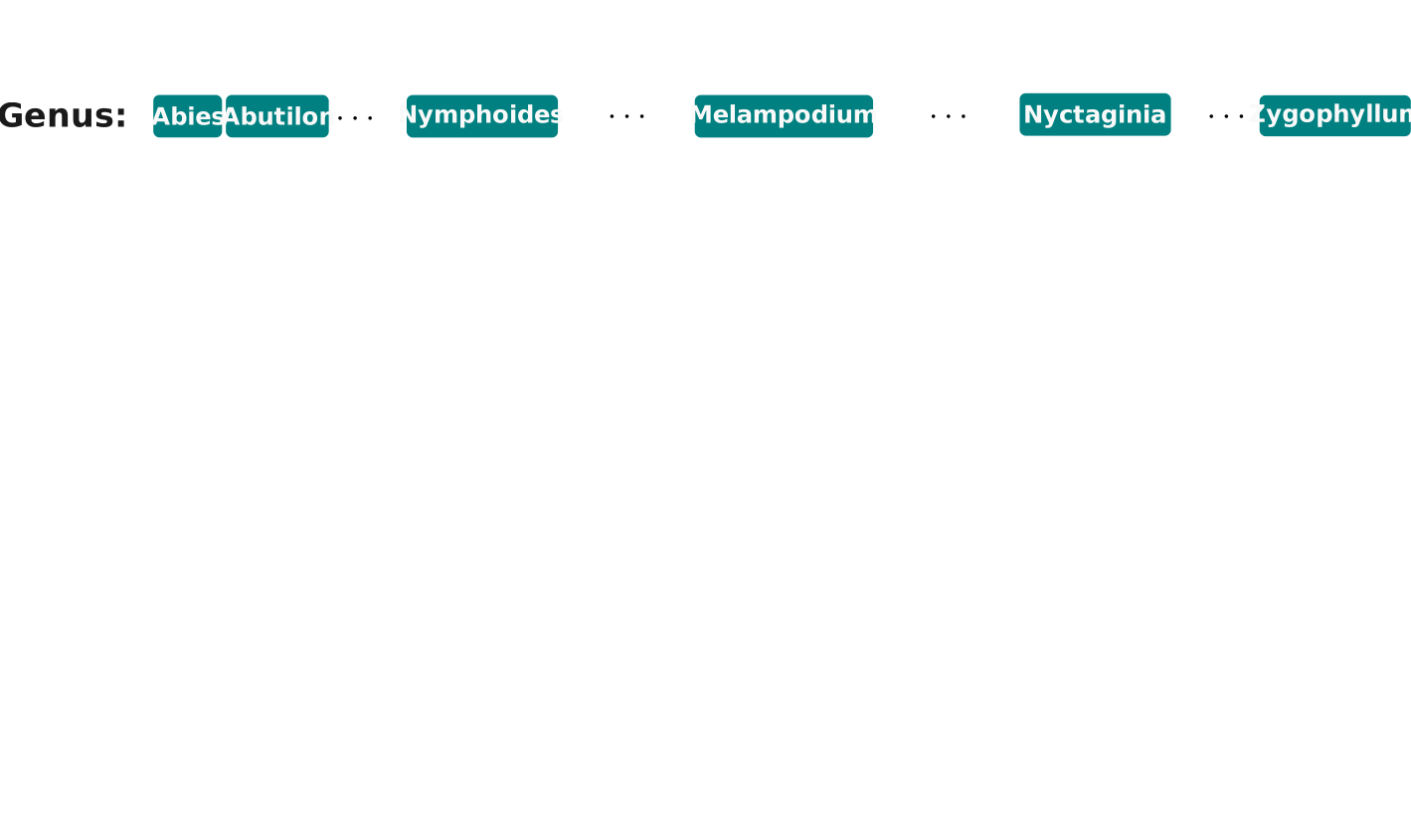
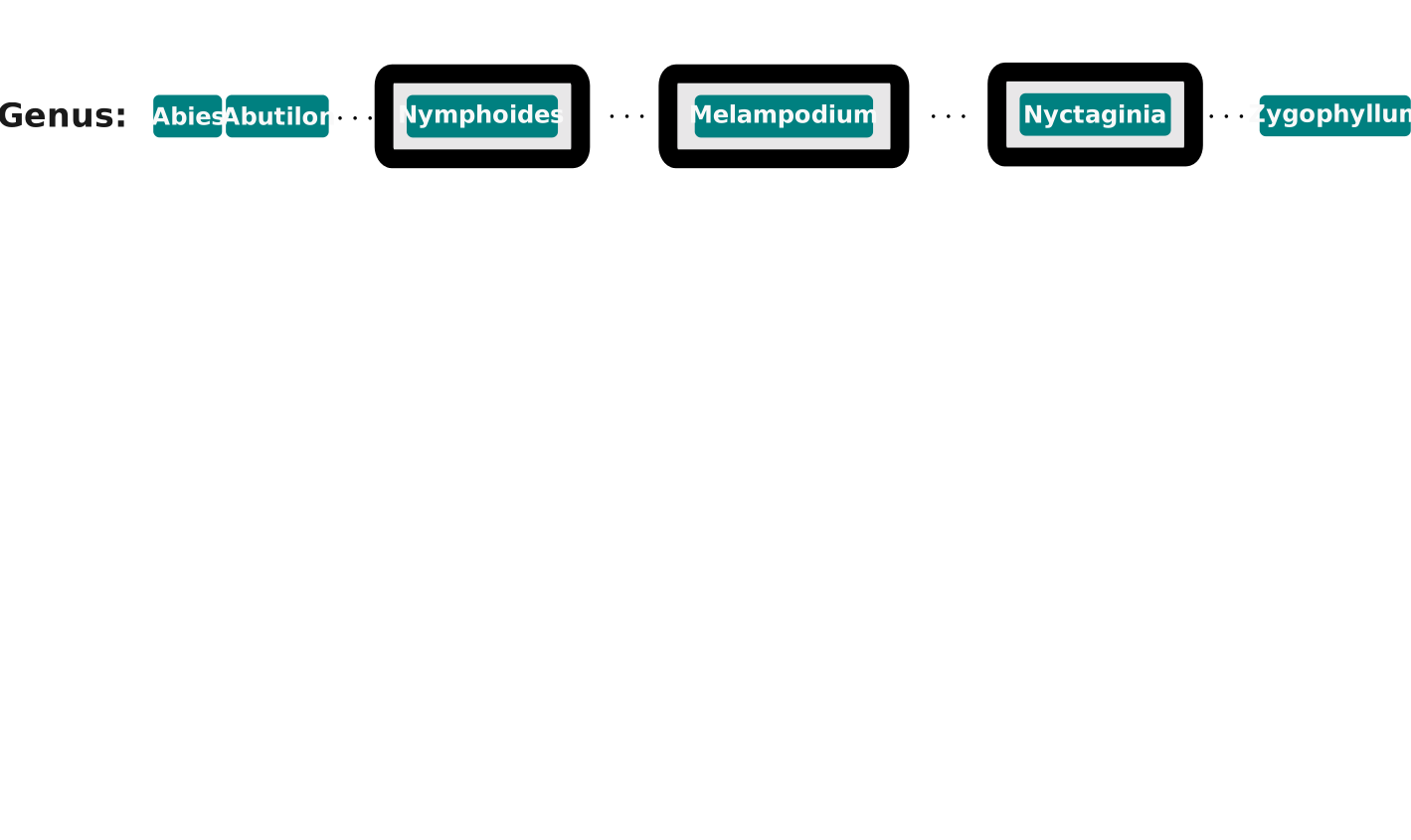
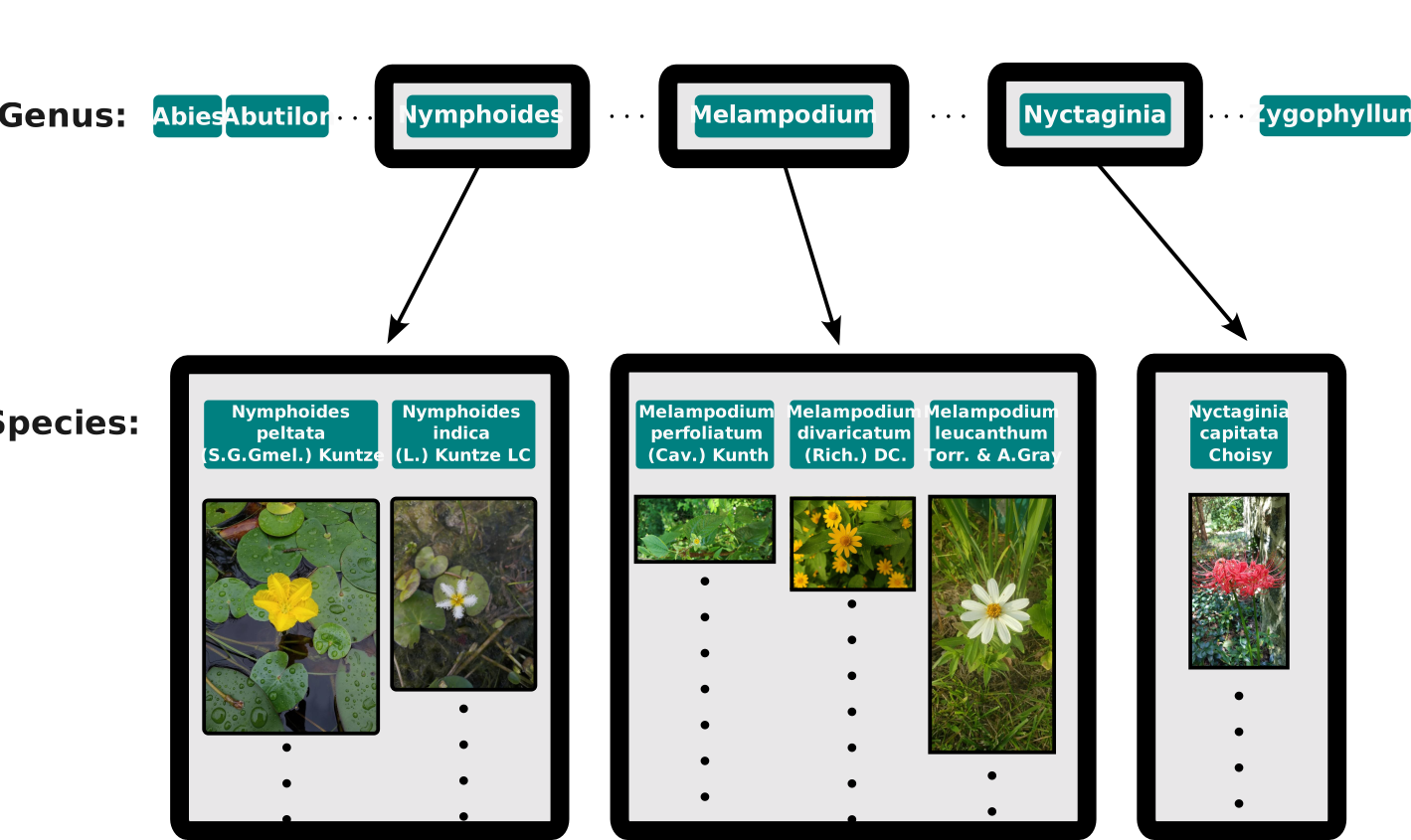
- Sample at genus level (10%) from all genera present in Pl@ntNet-300k
- Collect all images of such genera from Pl@ntNet (SWE)
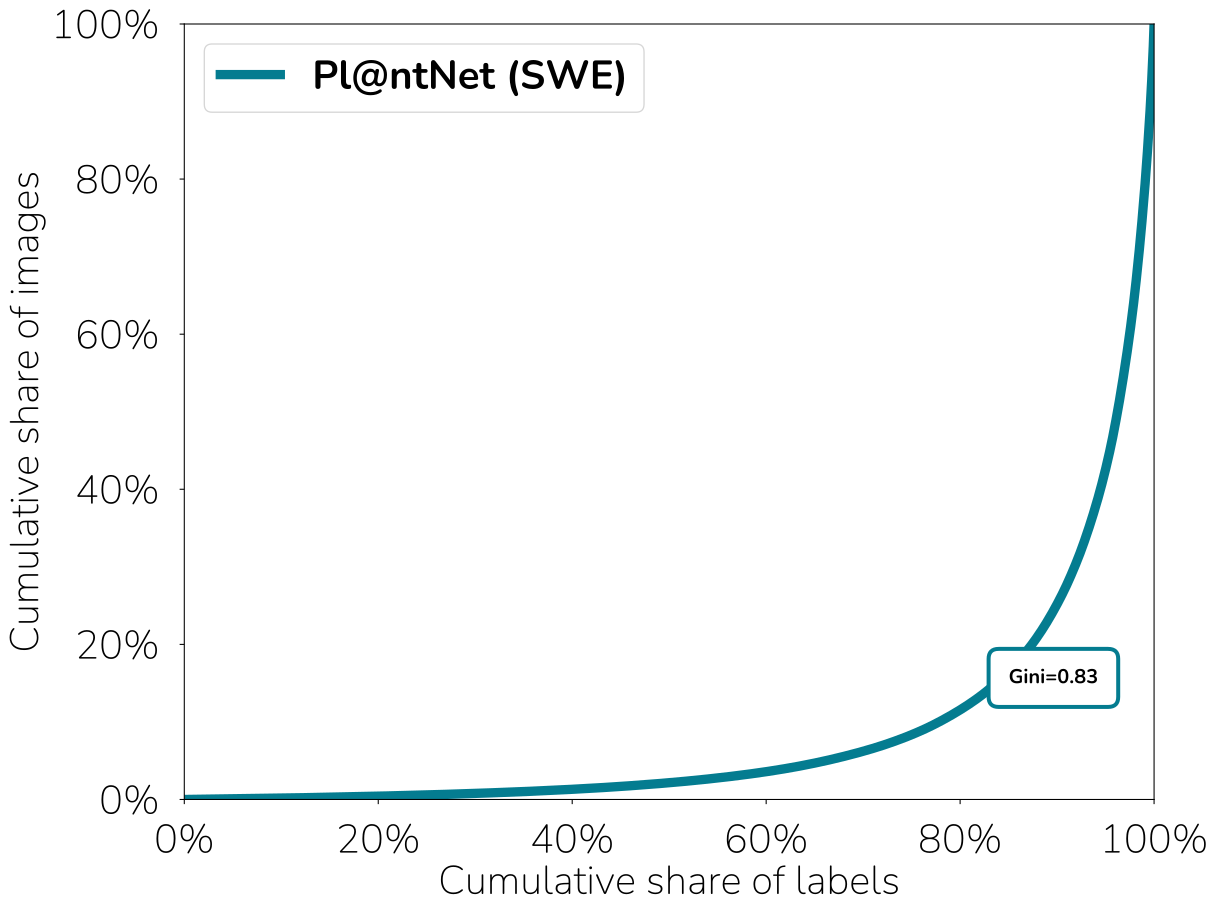
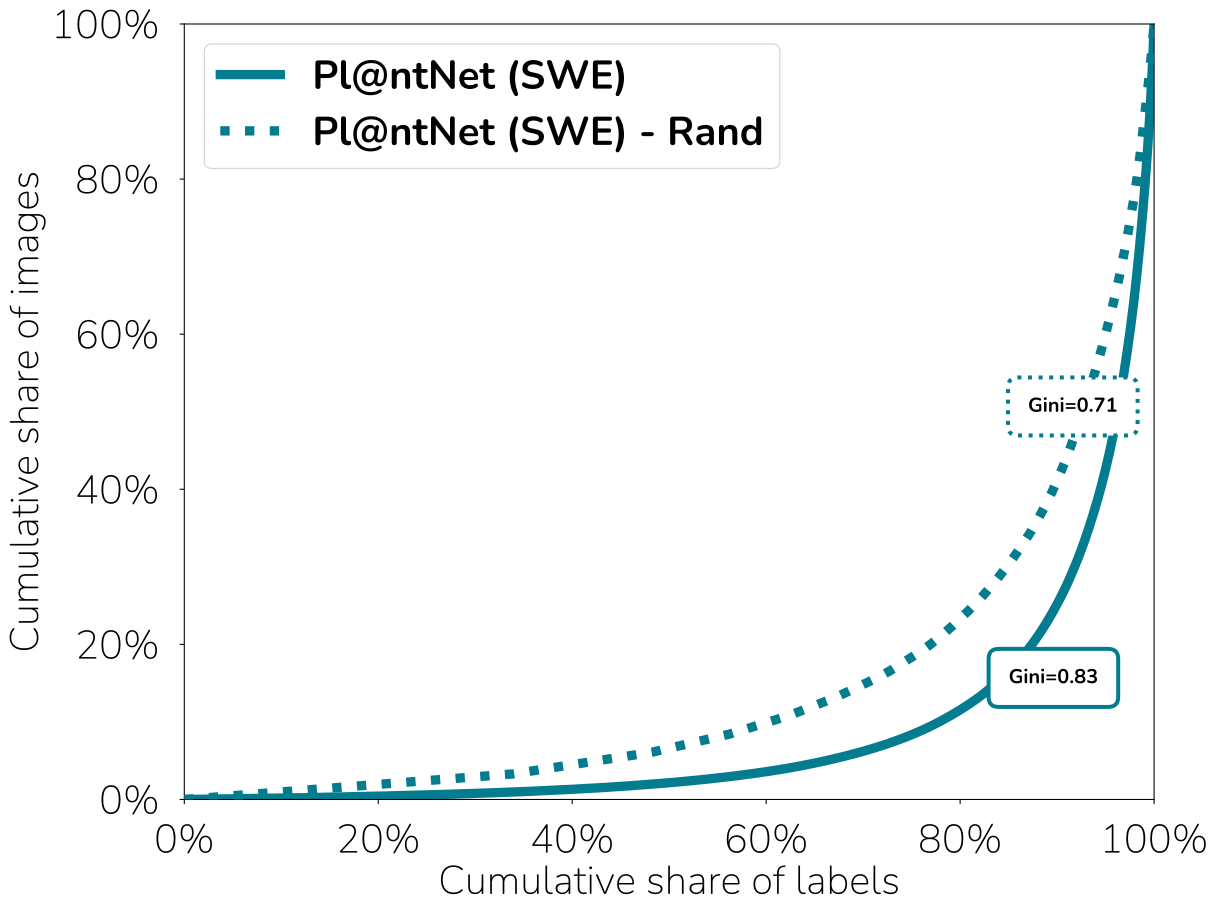
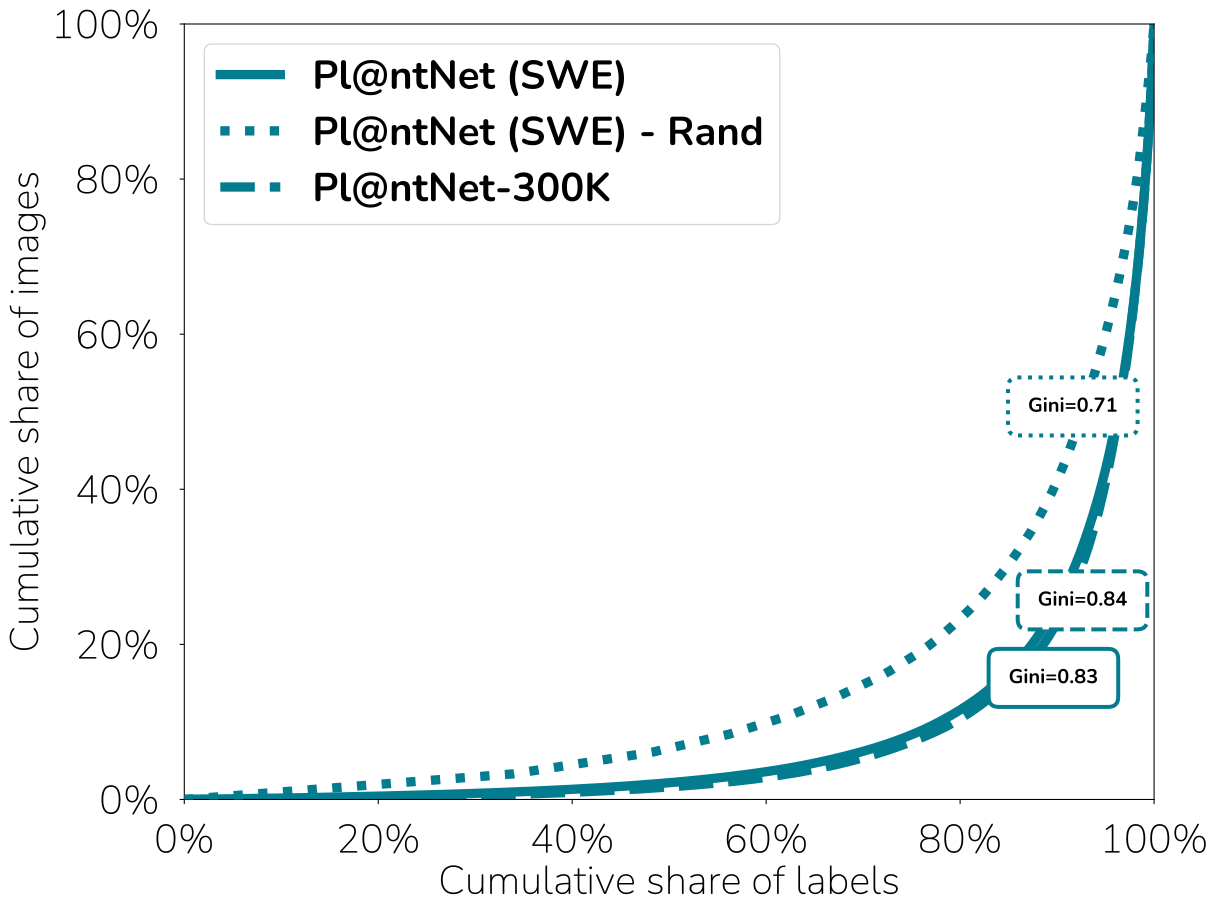
- Pl@ntNet (SWE): has a very long tail
- Pl@ntNet (SWE) - Rand: subsampling images uniformly from Pl@ntNet (SWE) distorts the distribution
- PlantNet-300K: long tail preserved by genera subsampling
Pl@ntNet-300K: Long tail visualization
Uncertainty quantification with long-tail

Tiffany Ding
UC Berkeley
within

Jean-Baptiste Fermanian
Inria
“Conformal Prediction for Long-Tailed Classification”
T. Ding, J.-B. Fermanian and J. Salmon
ICLR 2026
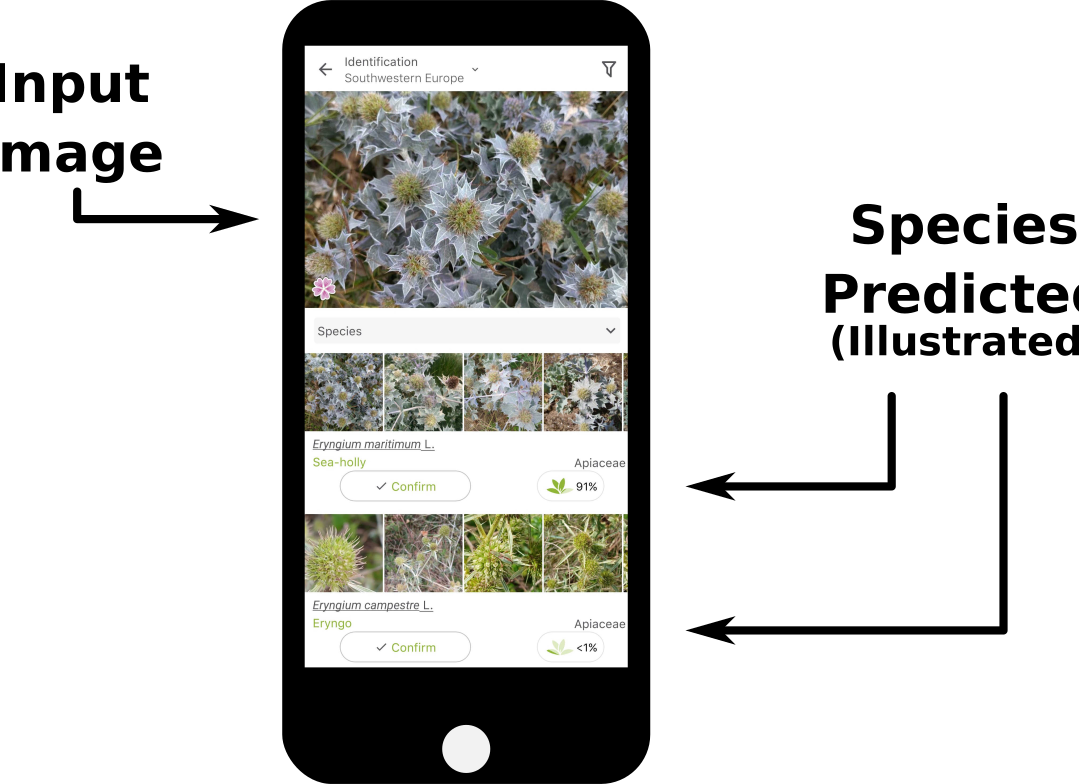
Pl@ntNet: set prediction (recommendation)
Elements to help guide the users
- provide a set of possible species/labels
- display similar images from proposed species
- give a score of confidence
Take home message
- Challenges in citizen science: many, varied and needing more attention
- Prediction: theory can guide which prediction set to display
Dataset release:
- Pl@ntNet-300K-v2: https://zenodo.org/records/10419064
- Pl@ntNet-CrowdSWE: https://zenodo.org/records/10782465
Code release:
- Toolbox: https://peerannot.github.io/
- Some benchmarks: https://benchopt.github.io/
Future work
- Handling label hierarchy
- Human–computer interaction / performative learning / model collapse
- Improve robustness to adversarial users
- Improve label agregation, leverage gamification (e.g., theplantgame.com), etc.